My Column – The Resurrection

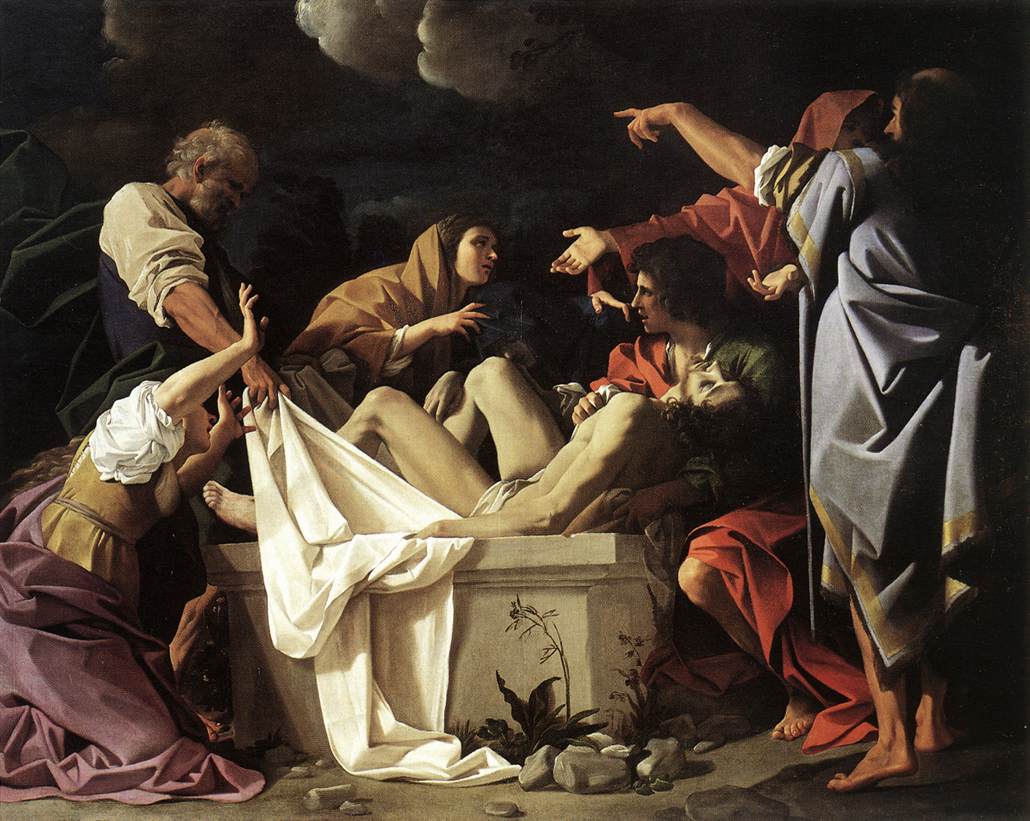
The angel awaits the apostles.

The Empty Tomb

The final article in this series is published today in the Scottish Catholic Observer. What does the resurrection really mean for us? No, really mean?
Get your copy this weekend or come back here next week for the full text.
The whole series is published on Kindle here

Find this on Kindle


The Way of the Cross – Fourteenth Station

Jesus is Laid in the Tomb.

Jesus burial

The fourteenth station on the Way of The Cross marks the end of the journey in the traditional ‘Stations’. It has become common nowadays to have a fifteenth station, The Resurrection. That’s where we will finish our journey next month. The fourteenth station is when Jesus is laid in the tomb. There is nothing surprising about that. Being laid in a tomb or grave marks the end of human life, something we all have before us.

It is the manner in which Jesus is laid in the tomb that raises questions in my mind. As we saw last month, the fact that Jesus’ body was taken down from the cross rather than being left as a warning to others was unusual. Because of the oncoming Sabbath he was hurriedly placed in the tomb, but the Jewish authorities had a stone rolled in front of the tomb and a guard detachment placed there.

I assumed this was done to thwart any attempt of his followers to remove the body and claim that he had been resurrected. However, Jesus’ foretelling of his resurrection was worded as ‘this temple’ and the people assumed he meant the Temple in Jerusalem. This was used against him at his trial. I wondered what the Jewish attitude to resurrection was.

After some research I discovered that the Jewish religion was divided on the idea of resurrection. People could believe there would be life after death or not. The Pharisees believed in resurrection but the Sadducees did not. Some believed in some forms of reincarnation. Whatever version they subscribed to, the Jews believed that any resurrection would only be in the time of the Messiah.

Perhaps some in authority might have had second thoughts about Jesus and hoped to shut him in the tomb if he did come back to life as Lazarus did. Whatever the truth of this supposition, I believe Jesus focussed minds of the Jewish people on death and what comes after.

For us this station is a reminder that we will certainly leave this world. This has been a central part of Christian belief and practice. We are welcomed into the Church at our baptism. The ceremony of baptism has been modified and changed over the centuries. John the Baptist baptised in the river. Early Christians were also baptised by immersion. Early churches had a pool for an immersive baptism. I believe there are still some examples in existence today.

The immersion in the water represented death and rising out of the water represented rebirth. We died to our old life and were reborn into a new life with Christ. At baptism we reject Satan and dedicate ourselves to Christ. I was very young at my baptism and remember none of it. Most of us experienced baptism as an infant so we missed the significance.

It is as adults that we have to look again at baptism and realise what promises were made on our behalf. We are promised to Christ and the values he taught. We are required to renounce the values of the world and materialism. That’s a difficult thing to do. How do we know what we can accept and what to reject in today’s world? It can be difficult to reject values which are normally accepted in our society. The Church’s attitude to sexual behaviour was scorned in the sixties and seventies. We were stuck in the past and needed to get up to date.

The recent scandals where cases of historical sexual abuse have hit the headlines are really a symptom of the lax attitude to sexual behaviour our society accepted. When pop stars and celebrities come to trial you won’t hear any mention of the Church’s teaching but we know it was and is right. We have to live our lives according to Gospel values whether that brings us into conflict with wider society or not.

This new life in Christ does not last forever on earth. The time comes when we too will be laid in the tomb as we pass from this life to the next. This station is a reminder of that and the fact that it will happen all too soon. I was recently at a hospital for an MIR scan. The hospital in Clydebank was a beautiful place and the doctors and staff were friendly and welcoming. Pleasant as this was it did not really prepare you for going into the scanner.

I lay in the machine as it buzzed and clanked, classical music playing through the earphones. When the scan was completed and I opened my eyes all I saw was the top of the tube I was in. It reminded me of Sean Connery waking up in a coffin in a James Bond film. Just for an instant I looked at the ‘coffin lid’ and wondered, “Is this what it will be like?”

The fourteenth station reminds us that the end could be sooner than we think. I was once asked what I would do if I was told I only had a short time to live. It is a difficult question to answer. Some people say they would visit places they had never seen. Some would spend all their money. Others, more thoughtfully, would visit friends and relations they had not seen for a long time.

I thought about it for a few minutes and decided that if I’m really living a Christian life, using my time for the coming of the Kingdom, then that’s what I should continue to do. If you are doing what God wants you to do then get on with it. On the other hand if you are not doing what you think you should do at the end of your time here then perhaps it’s time to start.

I suppose we should live every day as if it might be our last. In our fourteen stations we have seen that Jesus was welcomed by the crowds into Jerusalem and before the week was out he was executed. It made me thing about what I do with my time. If I die tomorrow will I have regrets, things I’ve left undone or will I have the satisfaction of having tried to live my life as Christ expected?

Now this is traditionally the last station on the Way of the cross, but there are modern variations which regard the fourteenth station as unfinished business. There are churches where there is a fifteenth station. The Way only finished at fourteen for those who had missed the message. It is not the end of the road.

We are now all on our Lenten road, striving for spiritual growth by our sacrifices and prayer. I’m back to giving up drink because I found it impossible to give up coffee. I hope you are all finding something uplifting in your Lenten works and feel the benefit at Easter. The last station will be in the Easter edition of the paper, time to contemplate what we have achieved on our Lenten Way of The Cross.

Joseph McGrath

Jesus is Laid in the Tomb. The 14th Station on the Way of The Cross

Jesus burial

This month sees us reach the end of the traditional way of the cross. What’s so important about being laid in a tomb? Of course we are not finished yet!

This week sees this article published in the Scottish Catholic Observer. Get your copy in your local parish. The full text will be here next week.

The Thirteenth Station Jesus is Taken Down from the Cross

Christ on the cross

What’s so strange about removing a corpse?


This is the station I have been worried about. What is there to say about it? Of course Jesus is taken down from the cross, that’s what we would expect, isn’t it? What more is there to say? What message can we take from this station? Well actually there might be more to this than first appears. The Romans used crucifixion, not only as an execution but as a warning to others. The bodies were usually left to hang on the cross, visible to all who travelled into the city. This would terrify anybody who was thinking about opposing the mighty Roman army. Anybody seeing the decaying corpses would think twice and probably keep their thoughts to themselves.

In this case the body of Jesus was released that very afternoon. He was not to be left hanging as a warning to others. This seems to break the tradition of Roman crucifixion. According to the Gospel of John,

After this, Joseph of Arimathaea, who was a disciple of Jesus – though a secret one because he was afraid of the Jews – asked Pilate to let him remove the body of Jesus. Pilate gave permission, so they came and took it away. Nicodemus came as well – the same one who had first come to Jesus at night time.

John 19: 38, 39


I noticed that only John mentions Nicodemus in his account. The other three evangelists say nothing about him. I’ll come back to that later. If it was the custom to leave the bodies to rot on the cross why did Pilate readily agree to Joseph’s request? Why did the Jews not object? There’s more to this than meets the eye.

What happened at the death of Jesus that seems to have caused this change of heart? Looking back we see that when Jesus died on the cross there were great signs. Matthew recounts them.

At that, the veil of the Temple was torn in two from top to bottom; the earth quaked; the rocks were split; the tombs opened and the bodies of many holy men rose from the dead.

Matthew 27: 51, 53

I think it is fair to say that people knew that something terrible had happened. The centurion is quoted as saying “In truth this was a son of God.” Even the heathens knew that this was no normal execution. I wonder how those responsible felt about their part in this when they saw those signs? Pilate of course had been warned by his wife and was reluctant to become involved. His hand washing at the pavement was his attempt to avoid any blame.

Have you ever had an instance of a child breaking an ornament and then hiding it under the sofa, pretending it had never happened? I think the authorities were behaving like that. The removal of the body, hiding it in the tomb was their denial. They were anxious to have the whole business forgotten, swept under the carpet. Of course we know now that that is not what happened. Things took an entirely different course altogether.

The apostles seem to have been in shock. This was not what they had expected. The triumphal entry into Jerusalem a few days before seemed to promise a great future for Jesus and for them. Now they were in hiding and everything seemed to have come to nothing. Peter, who had been made the head of the Church by Jesus had denied his master and was riven with guilt. The ‘Church’ was in disarray.

This is where Joseph of Arimathaea and Nicodemus come in. We met Nicodemus earlier in the gospel story. He had come to Jesus in the night. He was a prominent Jew who came to believe in Jesus. He came out of darkness into light. Joseph of Arimathaea is said to be a secret believer. He was afraid to show his belief for fear of what the Jews might do to him. In the story so far they are nobodies. They have no prominence.

Now, when it all seems to be falling apart, it is these men who step forward and take charge of the body of Jesus. It is they who place Jesus in the tomb. This would normally be something a family would see to. In a sense we are seeing a new definition of family. Joseph and Nicodemus step up and ensure that God’s plan will proceed.

The authorities would have expected the execution of Jesus to scare off any followers of Jesus and, as we see in the case of the apostles, it worked. Strangely enough it was the people who had been afraid before who now acted. We see a transformation in those who, like Joseph and Nicodemus, had been afraid but now put their fear behind them. The crucifixion had strengthened their faith rather than destroy it.

This is something I had not realised before. When the Church was in its first crisis it was not the apostles who pulled it together but just ordinary followers. That rang a bell with me. The Church in Scotland found itself in a crisis again recently when the Cardinal admitted some wrongdoing. The media appeared outside the cathedral in Edinburgh to ask the Catholics coming out of mass how their faith had been affected by the revelations. I remember two Edinburgh ladies explaining that their faith had not been shaken at all. Their faith was in God, not in any of the priests, bishops or cardinals of the Church. In the days that followed ordinary Catholics rallied and showed that the Church is still the Church started by Jesus no matter what foolishness we humans bring to it.

So the message for me in this station is in the nature of a question. What kind of follower am I? When things get difficult and the Church is held up to ridicule what is my reaction? Am I tempted to shut myself away from it all? Perhaps I’m the kind of Catholic who might like to distance myself from it all. Perhaps I’ll find myself saying that I’ve always had my doubts and now I can see how wrong we were.

On the other hand I might be the kind of Catholic who sees the Church as my home. Am I the sort of Catholic who sees the Church as something made up of people rather than an organisation that I can join while it suits me? I hope I see myself as part of the family that is the Church. I hope I’m the sort of Catholic who smiles when he listens to people who say the Church should share out all its wealth with the poor; a smile because the wealth of the Church is the faith of its people. I’ve been lucky enough to witness that treasure being shared out to the poorest people in the world by priests, nuns and many lay people. It is those who give of themselves, not those who only give some money who are sharing out the treasure of the Church.

The message in this station is easy to ignore. We can just Look up at the image of Mary holding the lifeless body of her son, recite “I love you Jesus, my love above all things.” and then move on to the next station. Perhaps, though, we might pause and ask ourselves whether we would join with Nicodemus and Joseph of Arimathaea and keep God’s plan on track. They found themselves in the most difficult of times and found their faith strengthened. Perhaps these difficult times will strengthen our faith.


Joseph McGrath

Good News – The Wait is Over!

Yes, my January column is published this weekend in the Scottish Catholic Observer. I know it is February but we had a big splash on SCIAF last weekend ( hope you read that) and some things are worth waiting for.

I hope this one was worth waiting for. What’s strange about taking a body down from the cross? If you miss this week’s edition the full text will be here next Friday.

My January Column – Where did it go?

It looks like my January column in the Scottish Catholic Observer is not in this week’s edition. That’s not a problem – I think it will be in next week. This week, however, we have a large spread on the work of The Scottish International Aid Fund (SCIAF).

SCIAF was born in my home parish of Saint Columbkille’s in Rutherglen and has made unbelievable changes to the lives of some of the poorest in the world. You really need to see this weeks paper to get a flavour of what they are doing.

Try again next week for my article.

Jesus is Taken Down From the Cross – Nothing Strange There?

Christ on the cross

What’s so strange about removing a corpse?

I was worried that there was nothing much to say about a body being removed from the cross. How wrong I was. Extraordinary when you think about it.

Read my musings on the thirteenth station on the Way of the Cross in this week’s Scottish Catholic Observer. It’s out today and you can pick it up at your local parish.

The full text will be available here next week, but the paper has so much more.

My December Column – Jesus Dies on the Cross – Full Text

The crucifixion

Jesus Dies on the cross

The Way of the Cross 12 Jesus Dies on the Cross.

On the way of the cross we have been following the progress and suffering of Jesus as he made his way through Jerusalem to Calvary. We have been looking at each situation to discover what messages are contained there for us.

In this station we come to the death of Jesus. It is a scene of loss and sadness. It is also one of relief that his suffering has come to an end. His suffering has put our own pain into perspective. Is that what this station is about, relief that it is all over?

After all his suffering it comes as no surprise to us that Jesus dies. It did come as a surprise to Pontius Pilate. As we will see later, he thought the death would have come much later. It is worth looking at how the cross kills. Death on the cross was a slow process. The victim is suspended by his arms with his legs helping to support his weight. The effect of this was to restrict his breathing and as he tired more pressure on his breathing would eventually kill him. This was a slow tortuous process intended to inflict a great deal of suffering.

The crowd has gathered to watch the spectacle. Many laugh and jeer. We might find this hard to understand but it is worth remembering that public executions in this country only ended in the UK with the execution of Michael Barrett on the 26th of May 1868 outside Newgate prison. In the case of Jesus the crowd did not understand who he really was. When he cried out he was offered vinegar to drink, probably vinegar and water as a way of hydrating him and keeping him alive to extend the suffering.

How did Jesus behave in his suffering? He continued to teach us how to live. There were two thieves crucified beside him. To the thief who confessed his guilt and asked to be remembered he promised paradise. Before giving up his spirit he asked the Father to forgive his tormentors. There is a powerful message for us there. How easy is it to forgive those who we think have slighted us or hurt us? Yet here is Jesus forgiving not only criminals but the very people who have tortured and put him to death.

Pilate orders the victims’ legs to be broken to hasten their death as it was almost Passover. Breaking the legs of the victims meant they could not support their weight and the whole weight would act to restrict their breathing. The soldiers reported that Jesus had already died, much to the surprise of Pilate. Jesus was not to be ruled by death he was about to conquer death. At his death Jesus has now left his human condition, his work done. What was his final message to us?

Jesus had already taught his followers that the commandments could be summarised in two simple commandments.


But when the Pharisees heard that he had silenced the Sadducees they got together and to disconcert him, one of them put a question, ‘Master, which is the greatest commandment of the Law?’ Jesus said, ‘You must love the Lord your God with all your heart, with all your soul, and with all your mind. This is the greatest and the first commandment. The second resembles it: You must love your neighbour as yourself. On these two commandments hang the whole Law, and the Prophets also.’

Matthew 34: 34, 40


Now in his crucifixion Jesus is revising that teaching. He goes much further. Jesus dies on the cross to save each of us. In doing so he demonstrates a love for us which is greater than love for himself. I think this is the most significant message Jesus gives us in his last act. The message is clear; Jesus’ sacrifice was to complete the Father’s plan for us. He demonstrated his love for the Father and his love for us. If we are to take up our cross as Jesus instructs us then we must love God and love our neighbour more than we love ourselves.

Then Jesus said to his disciples, ‘If anyone wants to be a follower of mine, let him renounce himself and take up his cross and follow me. For anyone who wants to save his life will lose it; but anyone who loses his life for my sake will find it.’

Matthew 26: 24, 25


Does this mean we must all be martyrs if we are to be true Christians? That is too simplistic. It really means that our neighbour’s needs are not to be put aside until we have completely satisfied all our own needs. We can’t put off helping the hungry until we have had our lavish Christmas dinner. We might have to put off buying those nice shoes we saw in the shop window and spend the money on helping the victims of Ebola virus.

We can find lots of examples of people who put the needs of others before themselves. The medical staff who travelled to West Africa to treat Ebola victims, risking their own lives, come to mind immediately. Think of others whose lives are put at risk for the wellbeing of others. I recall watching a fire engine racing towards a block of flats and thinking, what kind of person will run into a burning building when everyone is running out? These are special people indeed.

We have example of priests and religious who give up a normal family life in the service of the rest of us. What does that mean for us? In marriage we must live not only with each other but for each other. Our lives are put at the service of our spouse and our children. Jesus dies on the cross. Our cross is to live for others, not too much to ask in comparison.

Now you might be thinking that this article is a bit serious for a Christmas edition of the paper. Surely we should be thinking of happier things at Christmas? Well, I think it is a fitting topic and I’ll tell you why.

At Christmas we are celebrating the birth of Jesus. A child’s birth is always a cause for great celebration. But, this birth is different. Jesus brings joy, not only to the family and those around but he brings joy for all mankind. This birth is more important than any other because it is the beginning of the process of our redemption. Jesus has come, not only to let mankind experience the presence of God among us but to teach us how to live with each other and to open Heaven for us.

The Nativity and the crucifixion are the beginning and end of Jesus’ time on earth. Without the Nativity there could be no salvation and without Calvary the Nativity would be insignificant. While we are enjoying our Christmas celebrations and visiting the child in the manger let us remember that this child came to change the world. His coming is a threat to many and a promise of salvation for all. He presents us with a choice; indulge yourself in the pleasures of this world or join with me in changing the world for ever.

It is tempting to just sing the carols, send the cards and wish each other ‘Happy Christmas’. It is surely a time for great joy and celebration. We will all be giving and receiving gifts but are we prepared to go further and take up Christ’s challenge and give up our lives?

Happy Christmas

Joseph McGrath

Is This Suitable for Christmas?

The crucifixion

Jesus Dies on the cross

My December column is published today in the bumper Christmas and New Year edition of the Scottish Catholic Observer.

It deals with the 12th station on the Way of the Cross, Jesus dies on the cross. Is this relevant to Christmas, a time of joy and celebration? Get your copy today and see what you think.

Jesus is Nailed to the Cross – Full Text

A crucifix

The large crucifix in Nigeria

The 11th Station Jesus is nailed to the cross


In this series of articles I’m taking the Way of the Cross and pondering on what each station is saying to us. I must stress that these are personal thoughts and if they seem a bit strange then that’s about me rather than the Church. The eleventh station recalls that Jesus was nailed to the cross. We are all familiar with this.

I grew up in a house with a crucifix on the wall. My rosaries have a small crucifix on the end. Jesus nailed to a cross has been the wallpaper of my life. Every church I visit has at least one crucifix. Some are small and some are large they are all works of art. I expect to see a crucifix on a church, a classroom wall, in a home. It is just a familiar item.

A few years ago I read an article by a woman who had gone into a church and was shocked by the sight of a man nailed to a cross – a crucifix. What sort of people are these who have horrible things like that in their churches? I was shocked at her reaction. Had she never seen a crucifix? Where was she coming from?

In my Missio life I was on a visit to Nigeria and stayed for a few days in a parish in Lafia. I wandered into the church where the ladies were preparing for the harvest festival mass. The crucifix on the wall behind the altar (see the picture) was the biggest I have ever seen. It dwarfed everything and everyone. I literally fell on my knees. Now it was my turn to be shocked. I’m not sure why, perhaps it was the sheer size of the crucifix, but the thought in my head was, “What have I done?”

Now I’m sure you learned the same thing as I did at school; Jesus died on the cross for my sins. That is disturbing but this giant crucifix brought home to me the enormity of what happened. No other crucifix I have seen has had this effect on me. How do I deal with this? As usual I’ve pushed it to the back of my mind to pretend it is not there; but it is there and will not go away.

Peter Howson is an artist I have admired for some time. He paints picture that do not flatter but point the finger. He completed his “Saint John Ogilvie” for the refurbished cathedral on Clyde street and there was an exhibition of some of his preparatory sketches and paintings in the adjacent offices. I went along, eager to see how he had come to his final work.

The whole exhibition was very moving. One sketch in particular caught me. It was the face of Christ, crowned with thorns and terrified! This was not the quiet suffering face of Christ I had seen in many works of art. This was the face of a man about to go through an extremely brutal experience. He was about to be nailed to the cross. This image made me stop in my tracks. It was the first picture I have seen that conveyed the true horror of what Jesus underwent; and he did it for me.

Suffering is not something we are unaware of. If you are clumsy like me then you you suffer lots of minor accidents. Have you ever hit your finger with a hammer? I’m not trying to promote this as a hobby. It is very painful and produces all sorts of words your children should never hear. I have done this many times; take it from me, it is not to be recommended. It is even worse to puncture yourself. Getting a cut in the kitchen or even pricking yourself with a needle cause pain but it passes and soon heals.

Have you ever stapled your finger? That’s altogether different. It hurts on the way in and it is really painful on the way out. That’s because, unlike the needle or the kitchen knife, the edge of the staple is ragged. When they nailed Jesus to the cross they didn’t have the smooth, regular, machine made nails we are familiar with. In those days nails were made by hand by a blacksmith wielding a hammer. The nails were bashed out of bars of iron. There was nothing delicate about these rough-hewn pegs.

Jesus was held down and the nails were bashed through him into the wood. Most of the old paintings show the nails piercing his hands but more recent commentators have decided that it is more likely that the nails pierced his wrists. I don’t know if it makes a difference which one it was. In both cases the nails must have shattered bone and muscle. It is really too horrible to contemplate.

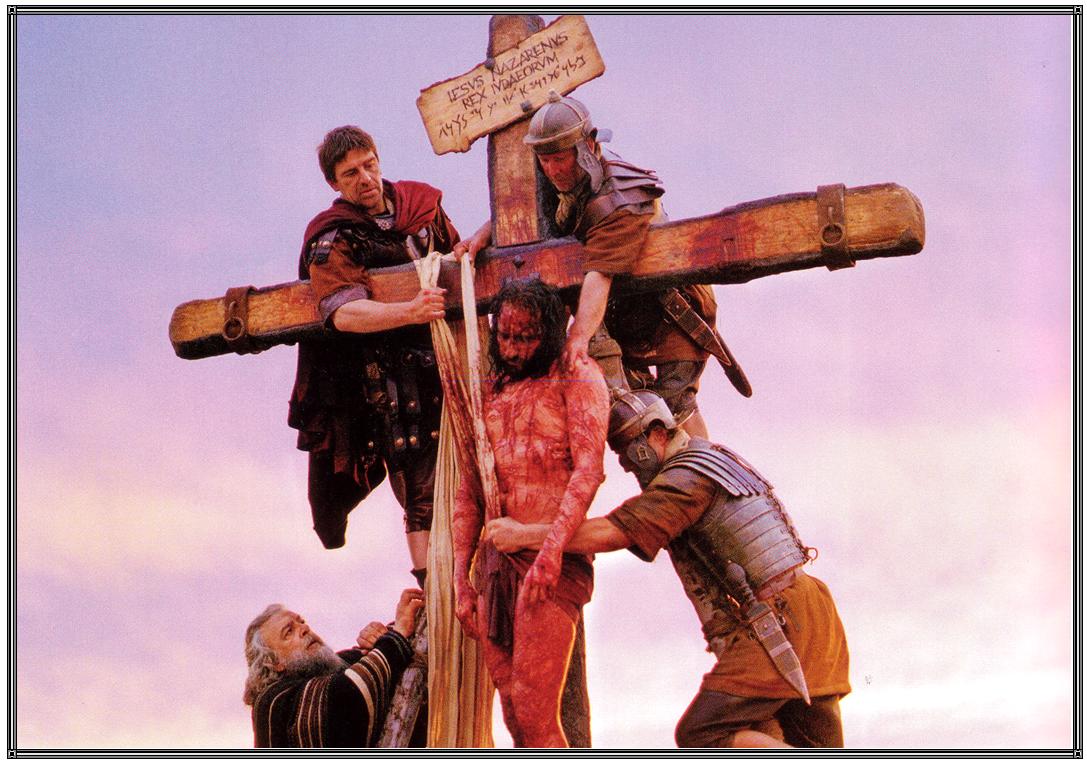
A few years ago, in 2004 to be exact, Mel Gibson directed a film called ‘The Passion of the Christ’. It re-enacted the last twelve hours of Jesus’ life. The Passion of the Christ is the highest grossing R-rated film in United States history, and the highest grossing non-English-language film of all time. It caused outrage. Some critics called it obscene. It was shown on television a few years ago and I decided to watch. I gave up watching at the scourging at the pillar. It was obscenr because it was depicting that was too horrible to watch.

Some complained that it was blaming the Jews for killing Jesus. Some complained that the extreme violence obscured the message. I don’t agree with either complaint. The film made me feel that I have caused this horror because Jesus died for my sins. The violence is part of the message. We find it difficult to deal with the violence because it reflects on us.

This year and especially during the month of November we have been looking back to the First World War. Our televisions have shown us the slaughter that both sides inflicted on each other. We have paid tribute to those who died for their country. We have solemn parades and use the poppy as a symbol of the blood let on Flanders fields. Yet we fail to look at the real horror. This was a war where new weapons were devised to kill more man more quickly.

Soldiers were killed by poison gas; flamethrowers were introduced to exterminate whole trenches of men. Machine guns provided mechanised killing. Aircraft were used to bomb civilians for the first time and battleships shelled towns on the east coast. Things only got worse from then on. Today we have weapons that can exterminate continents. We use advances in technology to bring the horrors of war to any place on the world, to any people and we can do it without leaving the office.

What is the significance of Jesus being nailed to the cross? Is Jesus showing us how we use cruelty and violence to get our own way? It was a warning to us. He showed us that it is in our human nature to be cruel. Despite the gifts of intelligence and science we have been given we can usually find a way to misuse them.

Why do I prefer the small crucifix on my rosaries to the large on that church wall in Nigeria? Well I suppose I find it hard to face up to the fact that it was my fault.


Joseph McGrath