Ready For Lent? Free E-Book Offer

Lent has begun. Are you ready for contemplation of the spiritual side?

Giving up chocolate, tea or alcohol is all very well (very difficult to give up red wine though) but you really need to attend to the spiritual side. If you would like something to prompt thoughts about religious belief then here’s a free offer for you.

My Kindle book is in free offer for two days only you can get it here on the 19th and 20th February 2015. That’s two days when you can save £0.99. (What a bargain!)

Click below to go to Amazon

A Creed For a Common Man


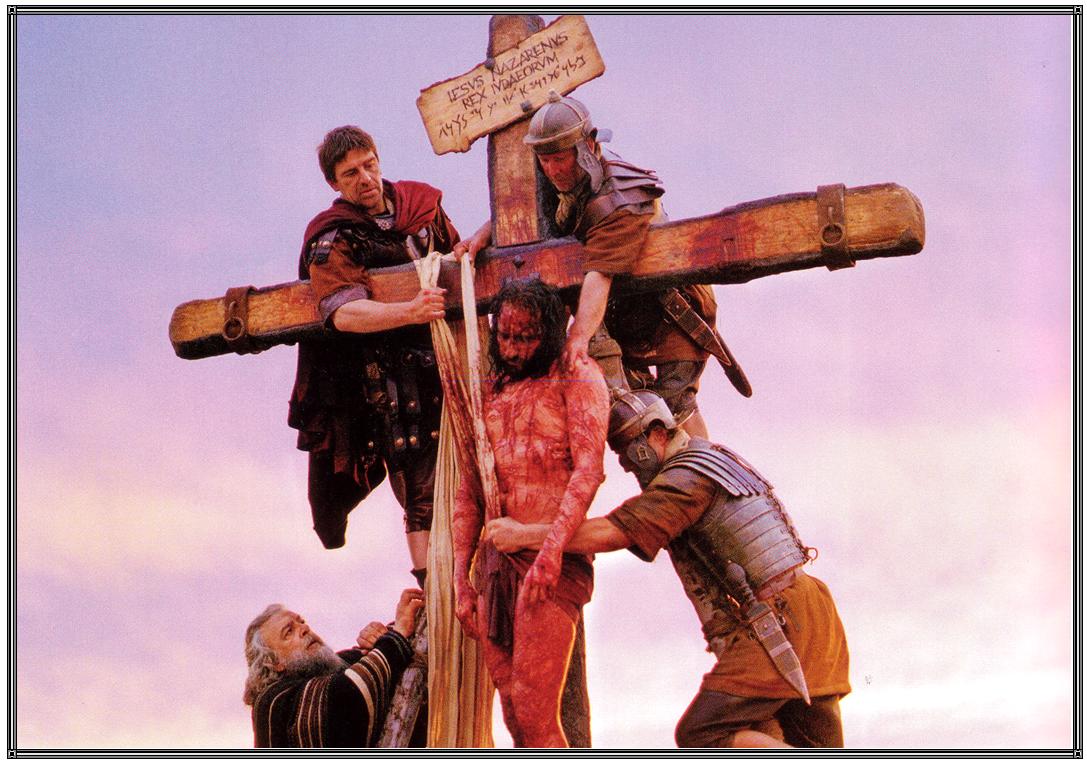
The Thirteenth Station Jesus is Taken Down from the Cross

Christ on the cross

What’s so strange about removing a corpse?


This is the station I have been worried about. What is there to say about it? Of course Jesus is taken down from the cross, that’s what we would expect, isn’t it? What more is there to say? What message can we take from this station? Well actually there might be more to this than first appears. The Romans used crucifixion, not only as an execution but as a warning to others. The bodies were usually left to hang on the cross, visible to all who travelled into the city. This would terrify anybody who was thinking about opposing the mighty Roman army. Anybody seeing the decaying corpses would think twice and probably keep their thoughts to themselves.

In this case the body of Jesus was released that very afternoon. He was not to be left hanging as a warning to others. This seems to break the tradition of Roman crucifixion. According to the Gospel of John,

After this, Joseph of Arimathaea, who was a disciple of Jesus – though a secret one because he was afraid of the Jews – asked Pilate to let him remove the body of Jesus. Pilate gave permission, so they came and took it away. Nicodemus came as well – the same one who had first come to Jesus at night time.

John 19: 38, 39


I noticed that only John mentions Nicodemus in his account. The other three evangelists say nothing about him. I’ll come back to that later. If it was the custom to leave the bodies to rot on the cross why did Pilate readily agree to Joseph’s request? Why did the Jews not object? There’s more to this than meets the eye.

What happened at the death of Jesus that seems to have caused this change of heart? Looking back we see that when Jesus died on the cross there were great signs. Matthew recounts them.

At that, the veil of the Temple was torn in two from top to bottom; the earth quaked; the rocks were split; the tombs opened and the bodies of many holy men rose from the dead.

Matthew 27: 51, 53

I think it is fair to say that people knew that something terrible had happened. The centurion is quoted as saying “In truth this was a son of God.” Even the heathens knew that this was no normal execution. I wonder how those responsible felt about their part in this when they saw those signs? Pilate of course had been warned by his wife and was reluctant to become involved. His hand washing at the pavement was his attempt to avoid any blame.

Have you ever had an instance of a child breaking an ornament and then hiding it under the sofa, pretending it had never happened? I think the authorities were behaving like that. The removal of the body, hiding it in the tomb was their denial. They were anxious to have the whole business forgotten, swept under the carpet. Of course we know now that that is not what happened. Things took an entirely different course altogether.

The apostles seem to have been in shock. This was not what they had expected. The triumphal entry into Jerusalem a few days before seemed to promise a great future for Jesus and for them. Now they were in hiding and everything seemed to have come to nothing. Peter, who had been made the head of the Church by Jesus had denied his master and was riven with guilt. The ‘Church’ was in disarray.

This is where Joseph of Arimathaea and Nicodemus come in. We met Nicodemus earlier in the gospel story. He had come to Jesus in the night. He was a prominent Jew who came to believe in Jesus. He came out of darkness into light. Joseph of Arimathaea is said to be a secret believer. He was afraid to show his belief for fear of what the Jews might do to him. In the story so far they are nobodies. They have no prominence.

Now, when it all seems to be falling apart, it is these men who step forward and take charge of the body of Jesus. It is they who place Jesus in the tomb. This would normally be something a family would see to. In a sense we are seeing a new definition of family. Joseph and Nicodemus step up and ensure that God’s plan will proceed.

The authorities would have expected the execution of Jesus to scare off any followers of Jesus and, as we see in the case of the apostles, it worked. Strangely enough it was the people who had been afraid before who now acted. We see a transformation in those who, like Joseph and Nicodemus, had been afraid but now put their fear behind them. The crucifixion had strengthened their faith rather than destroy it.

This is something I had not realised before. When the Church was in its first crisis it was not the apostles who pulled it together but just ordinary followers. That rang a bell with me. The Church in Scotland found itself in a crisis again recently when the Cardinal admitted some wrongdoing. The media appeared outside the cathedral in Edinburgh to ask the Catholics coming out of mass how their faith had been affected by the revelations. I remember two Edinburgh ladies explaining that their faith had not been shaken at all. Their faith was in God, not in any of the priests, bishops or cardinals of the Church. In the days that followed ordinary Catholics rallied and showed that the Church is still the Church started by Jesus no matter what foolishness we humans bring to it.

So the message for me in this station is in the nature of a question. What kind of follower am I? When things get difficult and the Church is held up to ridicule what is my reaction? Am I tempted to shut myself away from it all? Perhaps I’m the kind of Catholic who might like to distance myself from it all. Perhaps I’ll find myself saying that I’ve always had my doubts and now I can see how wrong we were.

On the other hand I might be the kind of Catholic who sees the Church as my home. Am I the sort of Catholic who sees the Church as something made up of people rather than an organisation that I can join while it suits me? I hope I see myself as part of the family that is the Church. I hope I’m the sort of Catholic who smiles when he listens to people who say the Church should share out all its wealth with the poor; a smile because the wealth of the Church is the faith of its people. I’ve been lucky enough to witness that treasure being shared out to the poorest people in the world by priests, nuns and many lay people. It is those who give of themselves, not those who only give some money who are sharing out the treasure of the Church.

The message in this station is easy to ignore. We can just Look up at the image of Mary holding the lifeless body of her son, recite “I love you Jesus, my love above all things.” and then move on to the next station. Perhaps, though, we might pause and ask ourselves whether we would join with Nicodemus and Joseph of Arimathaea and keep God’s plan on track. They found themselves in the most difficult of times and found their faith strengthened. Perhaps these difficult times will strengthen our faith.


Joseph McGrath
The Film That Defines America

Film Poster

More than a great comedy

I was recently watching a rerun of the great Blake Edwards comedy classic, “The Great Race”, starring Tony Curtis and Natalie Wood or Natalie Wood and Tony Curtis, depending on your outlook. This is a film that I have loved from the first viewing, despite poor reviews from critics.

This film is a great comedy, especially so for film buffs as it takes the mickey out of so many classic scenes. What I have only recently come to realise is that the film is the only cinematic production that defines the USA that I love. You might wonder why I think that, I’ll tell you why.

The film encapsulates the schizophrenia that underlies America. Shocked? No, let me explain. The hero is The Great Leslie (Tony Curtis), a clean cut (always spotlessly white) American hero who dares to challenge nature and overcome at every attempt. The anti – hero is Professor Fate (Jack Lemon), always dressed in black, secretive and produces outrageous devices which invariably land him in the Sh*t, literally.

These two characters represent the two faces of America. Leslie is the American hero who we (I ) have grown up with, good, clean and always successful. Fate is an out and out bad guy. Who is the real America? I have always rooted for Leslie. He is the good guy.

Fate is the bad guy who doesn’t play by the rules and produces strange devices, unlike Leslie who uses solid American vehicles. But, and for me this is a big but, it’s not really as simple as that. I realised that America does not always play by the rules. It is not always open and honest. In fact America is most proud of its ‘black ops’, undercover agents who don’t officially exist. Not everything in America is whiter than snow. The Space Shuttle was white alright but its really advanced craft was the SR71 Blackbird. It was black and it was secret.

Like Professor Fate’s devices the Blackbird was flawed. It leaked fuel when on the ground but operationally it was a great success. Fate produced flying machines, bomb sights, rocket propelled craft, homing torpedoes and a car the US Army would have gladly gone to war in. He was an innovator where Leslie chose a balloon and a factory built car.

Fate was the man the CIA would have turned to when they needed something. They wouldn’t let Leslie near Langley. I think professor Fate was the real American hero. He was an innovator. He never gave up when things went wrong. Every time he was blown up or got a pie in the face he came back for more. Leslie never got dirty.

Actually, In the end, it was Fate who won the race. He’s my man.

Good News – The Wait is Over!

Yes, my January column is published this weekend in the Scottish Catholic Observer. I know it is February but we had a big splash on SCIAF last weekend ( hope you read that) and some things are worth waiting for.

I hope this one was worth waiting for. What’s strange about taking a body down from the cross? If you miss this week’s edition the full text will be here next Friday.

My January Column – Where did it go?

It looks like my January column in the Scottish Catholic Observer is not in this week’s edition. That’s not a problem – I think it will be in next week. This week, however, we have a large spread on the work of The Scottish International Aid Fund (SCIAF).

SCIAF was born in my home parish of Saint Columbkille’s in Rutherglen and has made unbelievable changes to the lives of some of the poorest in the world. You really need to see this weeks paper to get a flavour of what they are doing.

Try again next week for my article.

Jesus is Taken Down From the Cross – Nothing Strange There?

Christ on the cross

What’s so strange about removing a corpse?

I was worried that there was nothing much to say about a body being removed from the cross. How wrong I was. Extraordinary when you think about it.

Read my musings on the thirteenth station on the Way of the Cross in this week’s Scottish Catholic Observer. It’s out today and you can pick it up at your local parish.

The full text will be available here next week, but the paper has so much more.

So Helen Doesn’t Love Her Yaris?

I picked up the Guardian Weekend Magazine yesterday and I read an article by Helen Pidd. She writes, “You can’t love a Yaris. It would be like loving socks or carrier bags.” I must admit I was really surprised to see someone hitting out at the Yaris as my wife got one last year and it has been surprisingly good. I should have spotted the clues in her quote. Who could love socks? Perhaps ask me when I’m barefoot on a cold morning. I love socks then. They might not be earth shattering but they do what they were designed for.

Apparently she started driving in an old second hand Yaris. It seems to have done what she wanted it to do but she didn’t feel excited by it. Now she has a Yaris hybrid. She really doesn’t like that. She complains that it is a town car, not really a motorway car and doesn’t have digital radio. Seems to me that a hybrid is a car designed for driving in town. It handles all the stopping and starting and driving in slow queues. Perhaps if digital radio coverage was better more people would want it in their cars.

Her article tells me more about Helen than the Yaris. My wife’s Yaris has lots of bells and whistles, six gears for economy and automated systems for wipers and lights with cruise control, speed limiter, ABS and traction control. All these leave the driver to concentrate on the real road hazards, people who like to be excited by their car and drive lime they were the only person on the road.

Helen, it seems like you bought the wrong car. It was your decision, don’t blame the car.

So This Is What They Are Up To? Charlie Has It Right.

Charlie Brooker has summed up the confusion and hopelessness people are feeling today. Nothing seems to make sense. What is really going on and who is controlling it?

Watch his video here or on Youtube.

Now, are you beginning to see what it is all about? Yess – power and money. Cui Bono? Follow the money.

My December Column – Jesus Dies on the Cross – Full Text

The crucifixion

Jesus Dies on the cross

The Way of the Cross 12 Jesus Dies on the Cross.

On the way of the cross we have been following the progress and suffering of Jesus as he made his way through Jerusalem to Calvary. We have been looking at each situation to discover what messages are contained there for us.

In this station we come to the death of Jesus. It is a scene of loss and sadness. It is also one of relief that his suffering has come to an end. His suffering has put our own pain into perspective. Is that what this station is about, relief that it is all over?

After all his suffering it comes as no surprise to us that Jesus dies. It did come as a surprise to Pontius Pilate. As we will see later, he thought the death would have come much later. It is worth looking at how the cross kills. Death on the cross was a slow process. The victim is suspended by his arms with his legs helping to support his weight. The effect of this was to restrict his breathing and as he tired more pressure on his breathing would eventually kill him. This was a slow tortuous process intended to inflict a great deal of suffering.

The crowd has gathered to watch the spectacle. Many laugh and jeer. We might find this hard to understand but it is worth remembering that public executions in this country only ended in the UK with the execution of Michael Barrett on the 26th of May 1868 outside Newgate prison. In the case of Jesus the crowd did not understand who he really was. When he cried out he was offered vinegar to drink, probably vinegar and water as a way of hydrating him and keeping him alive to extend the suffering.

How did Jesus behave in his suffering? He continued to teach us how to live. There were two thieves crucified beside him. To the thief who confessed his guilt and asked to be remembered he promised paradise. Before giving up his spirit he asked the Father to forgive his tormentors. There is a powerful message for us there. How easy is it to forgive those who we think have slighted us or hurt us? Yet here is Jesus forgiving not only criminals but the very people who have tortured and put him to death.

Pilate orders the victims’ legs to be broken to hasten their death as it was almost Passover. Breaking the legs of the victims meant they could not support their weight and the whole weight would act to restrict their breathing. The soldiers reported that Jesus had already died, much to the surprise of Pilate. Jesus was not to be ruled by death he was about to conquer death. At his death Jesus has now left his human condition, his work done. What was his final message to us?

Jesus had already taught his followers that the commandments could be summarised in two simple commandments.


But when the Pharisees heard that he had silenced the Sadducees they got together and to disconcert him, one of them put a question, ‘Master, which is the greatest commandment of the Law?’ Jesus said, ‘You must love the Lord your God with all your heart, with all your soul, and with all your mind. This is the greatest and the first commandment. The second resembles it: You must love your neighbour as yourself. On these two commandments hang the whole Law, and the Prophets also.’

Matthew 34: 34, 40


Now in his crucifixion Jesus is revising that teaching. He goes much further. Jesus dies on the cross to save each of us. In doing so he demonstrates a love for us which is greater than love for himself. I think this is the most significant message Jesus gives us in his last act. The message is clear; Jesus’ sacrifice was to complete the Father’s plan for us. He demonstrated his love for the Father and his love for us. If we are to take up our cross as Jesus instructs us then we must love God and love our neighbour more than we love ourselves.

Then Jesus said to his disciples, ‘If anyone wants to be a follower of mine, let him renounce himself and take up his cross and follow me. For anyone who wants to save his life will lose it; but anyone who loses his life for my sake will find it.’

Matthew 26: 24, 25


Does this mean we must all be martyrs if we are to be true Christians? That is too simplistic. It really means that our neighbour’s needs are not to be put aside until we have completely satisfied all our own needs. We can’t put off helping the hungry until we have had our lavish Christmas dinner. We might have to put off buying those nice shoes we saw in the shop window and spend the money on helping the victims of Ebola virus.

We can find lots of examples of people who put the needs of others before themselves. The medical staff who travelled to West Africa to treat Ebola victims, risking their own lives, come to mind immediately. Think of others whose lives are put at risk for the wellbeing of others. I recall watching a fire engine racing towards a block of flats and thinking, what kind of person will run into a burning building when everyone is running out? These are special people indeed.

We have example of priests and religious who give up a normal family life in the service of the rest of us. What does that mean for us? In marriage we must live not only with each other but for each other. Our lives are put at the service of our spouse and our children. Jesus dies on the cross. Our cross is to live for others, not too much to ask in comparison.

Now you might be thinking that this article is a bit serious for a Christmas edition of the paper. Surely we should be thinking of happier things at Christmas? Well, I think it is a fitting topic and I’ll tell you why.

At Christmas we are celebrating the birth of Jesus. A child’s birth is always a cause for great celebration. But, this birth is different. Jesus brings joy, not only to the family and those around but he brings joy for all mankind. This birth is more important than any other because it is the beginning of the process of our redemption. Jesus has come, not only to let mankind experience the presence of God among us but to teach us how to live with each other and to open Heaven for us.

The Nativity and the crucifixion are the beginning and end of Jesus’ time on earth. Without the Nativity there could be no salvation and without Calvary the Nativity would be insignificant. While we are enjoying our Christmas celebrations and visiting the child in the manger let us remember that this child came to change the world. His coming is a threat to many and a promise of salvation for all. He presents us with a choice; indulge yourself in the pleasures of this world or join with me in changing the world for ever.

It is tempting to just sing the carols, send the cards and wish each other ‘Happy Christmas’. It is surely a time for great joy and celebration. We will all be giving and receiving gifts but are we prepared to go further and take up Christ’s challenge and give up our lives?

Happy Christmas

Joseph McGrath

The Annual Report 2014 for this Blog

The WordPress.com stats helper monkeys prepared a 2014 annual report for this blog.

Here’s an excerpt:

A San Francisco cable car holds 60 people. This blog was viewed about 1,200 times in 2014. If it were a cable car, it would take about 20 trips to carry that many people.

Click here to see the complete report.
