Are you confused by the arguments about the currency an independent Scotland would have? If YES read the article below.
It’s clear and simple. Read and decide for yourself.
Are you confused by the arguments about the currency an independent Scotland would have? If YES read the article below.
It’s clear and simple. Read and decide for yourself.

Weep not for me
In this series of articles I’m looking at the way of the Cross and I’m trying to find the meaning behind it; the message for us. This is a curious incident on that final journey. Who were these women/ Why were they weeping and why does Jesus speak to them in the way he does? It’s very strange and it needs looking into.
I looked into the gospel accounts to see what I could find there. The only mention of this comes in Luke’s gospel.
The other three evangelists do not mention this incident. Why has Luke picked this out? He must have recognised an important message in this passage. The women in the passage are not the women who followed Jesus from Galilee. They are women of Jerusalem. If they are not followers why are they weeping and why does Jesus seem to discount their sorrow?
The question is one of ritual. Death has many rituals in different societies. In Jewish tradition women would be hired to come and weep and wail at funerals to set the sad, sombre tone of the occasion. This harks back to the story of Rachel whose tears prompted God’s forgiveness. Rituals like this are not uncommon in many societies. In Africa there are many tribes where wailing women are a matter of course.
I recall a story from my friend Father Pat McGuire who was on his first mission station in Ghana when he had to officiate at a funeral. The dead man’s widow jumped into the grave to be with her husband and could not be persuaded to come out. At a loss, Father Pat turned to a local priest for advice. He was told to start filling in the grave. When the first spade of earth was put in the woman jumped out. She was following a local ritual.
This may seem strange to us but we do similar things. Do you remember the film Oliver? Oliver was sold to an undertaker and dressed in black with a top hat, a mummer to precede the hearse and set a sad tone. We are still bound by funeral rituals today. We wear black. We have solemn faces, bells toll a solemn message of sadness. Yet, as Christians, we believe that death is the start of our new life in heaven; surely a happy occasion?
Rituals around death are changing in our society as we reject religion and need something in its place. I remember watching the funeral of Princess Diana and being amazed when people began throwing roses on to the hearse. Laying bunches of flowers, teddy bears or football tops on railings or at the roadside has become a ritual to mark the death of a loved one or even someone we barely knew. People are searching for something to replace a religious ritual. Perhaps the religious ritual really held no great meaning for them in the first place.
I am writing this while we are celebrating (?) the start of the First World War, the Great War as the media are calling it again. We have solemn ceremonies of rembrance of those who dies one hundred years ago. There seems to be little remembrance of those politicians who failed to avert a war in the first place. History shows little evidence of lessons learnt from the slaughter as we have managed to keep fighting wars where there need be none.
Is this false ritual what Jesus was referring to when he told the women not to weep for him? The ritual can hide the truth. Jesus’ words refer the women to another part of the Torah, our old testament, where in Jeremiah it says,
This is in the face of the punishment that God is to wreak on the Israelites for forsaking the law.The passage about calling on the mountains to fall on us is a reference to another scriptural passage. This one is from Hosea 10:8 warning the Israelites of the punishment God will mete out for their unfaithfulness. Perhaps Jesus is warning the Jews of what is to befall them after rejecting him as the Messiah.
Jesus is the green wood in the quote. He brought the completion of the covenant between God and man a new covenant. The Jews rejected him and stuck with the dry wood, the incomplete covenant. This would not be immediately obvious to the people. After the crucifixion the Jewish religion continued and does to this day. Christianity started small and grew slowly.
The message in Luke’s gospel is really one for us. He is warning us about adopting rituals which, though not bad in themselves, can hide the real message. What do I mean by that? Let’s look at ritual in our Christian lives. Going to mass on a Sunday is a good place to start.
When I was a boy (not really that long ago, surely) we were taught that the obligation was to assist at the sacrifice of the mass. That is a wee bit more than just being there. At the consecration we are witnessing something extraordinary. The bread and wine becomes the second person of the Trinity. Lights don’t flash. There is no booming voice from heaven. Never the less we come into the presence of Jesus, our saviour. This is impossible for us to understand fully. It requires our belief. How do we react to this?
Reactions vary. Some people talk through this part of the mass. Some read the parish bulletin. Some kneel and appear devout but might be thinking about something else. Some are praying in the presence of the Lord. I’m not making any judgements here. I’m just admitting that the ritual sometimes does not highlight the importance of the moment but can fool us (me included) into thinking we have got it right. If we are not offering ourselves with the bread and wine, if we are not joining in the sacrifice at the consecration then we are missing the point.
The rituals are good. They are the signposts that can keep us on the right track, alert us to something important. When we forget to recognise what the ritual is alerting us to then we have lost the plot. We are like the weeping women. The Pharisees were hot on ritual and you know what Jesus thought of them.
This is not about ‘going to communion’ and then carrying on with things as normal. This is our opportunity to accept Jesus into our lives and give that life to him in our sacrifice. We should be going out of church on a mission. We should be out to change the world, starting small, growing slowly. Changing ourselves and becoming an influence on others by our example.
In this station I have learned something Luke wanted to tell us about ritual. We must be able to recognise Jesus there and be alert to his presence in our lives.
Joseph McGrath
Weep not for me
My August column is published today in the Scottish Catholic Observer.
The eighth station – Jesus meets the women of Jerusalem. Who were these women and what were they really weeping about? Why do they get a mention today after almost two thousand years?
Is there a message here for any of us? Get the paper this weekend and see for yourself.
Don’t worry if you miss it. The full text will be available here next Friday (5th September). There is a lot more in the paper though.
Joseph
Reading this weekend’s Scottish Catholic Observer I was interested to see Kevin’s column dealing with the upcoming referendum. Kevin states that we have a moral duty to vote. This is a sentiment I wholeheartedly agree with. Kevin deftly points out the immorality of the policies pursued by our Tory and Lib Dem coalition and their attacks on the poor. There are moral issues here and we should take note.
Kevin’s point, however, seems to focus on how a vote for independence would free Scotland from immoral policies. He fails to show good examples of policies the Scottish Government has espoused which highlight morality. The same sex marriage bill seems to put great restraints on people of a christian outlook voicing their views and keeping their job in certain areas. It is an interesting thesis that leaving 90% of the population of the KU, the country we inhabit, to the mercies of the Tories is a moral act. Running away and making no attempt to change things does not seem like a moral stance to me.
For some reason Kevin seems to think that Scots are more moral than the English and Welsh. I must say that has not been my experience. Kevin is right to say that we have a moral duty to vote. He is right to suggest that we have a moral duty to work for a fair society. Picking up the ba and walking away does not fit the bill. Kevin is the very man to campaign against the greedy society, the immoral bankers (RBS anyone?) and politicians who rob the poor and help the rich.
Come on Kevin, you know you can do better than this!
You can read Kevin in the Scottish Catholic Observer. See what you think. Where does the moral path lead us?
Joseph
I’m just back from Carfin Grotto. I’m over there regularly and I wondered if people knew just how beautiful it is. That’s why I’ve published this post.
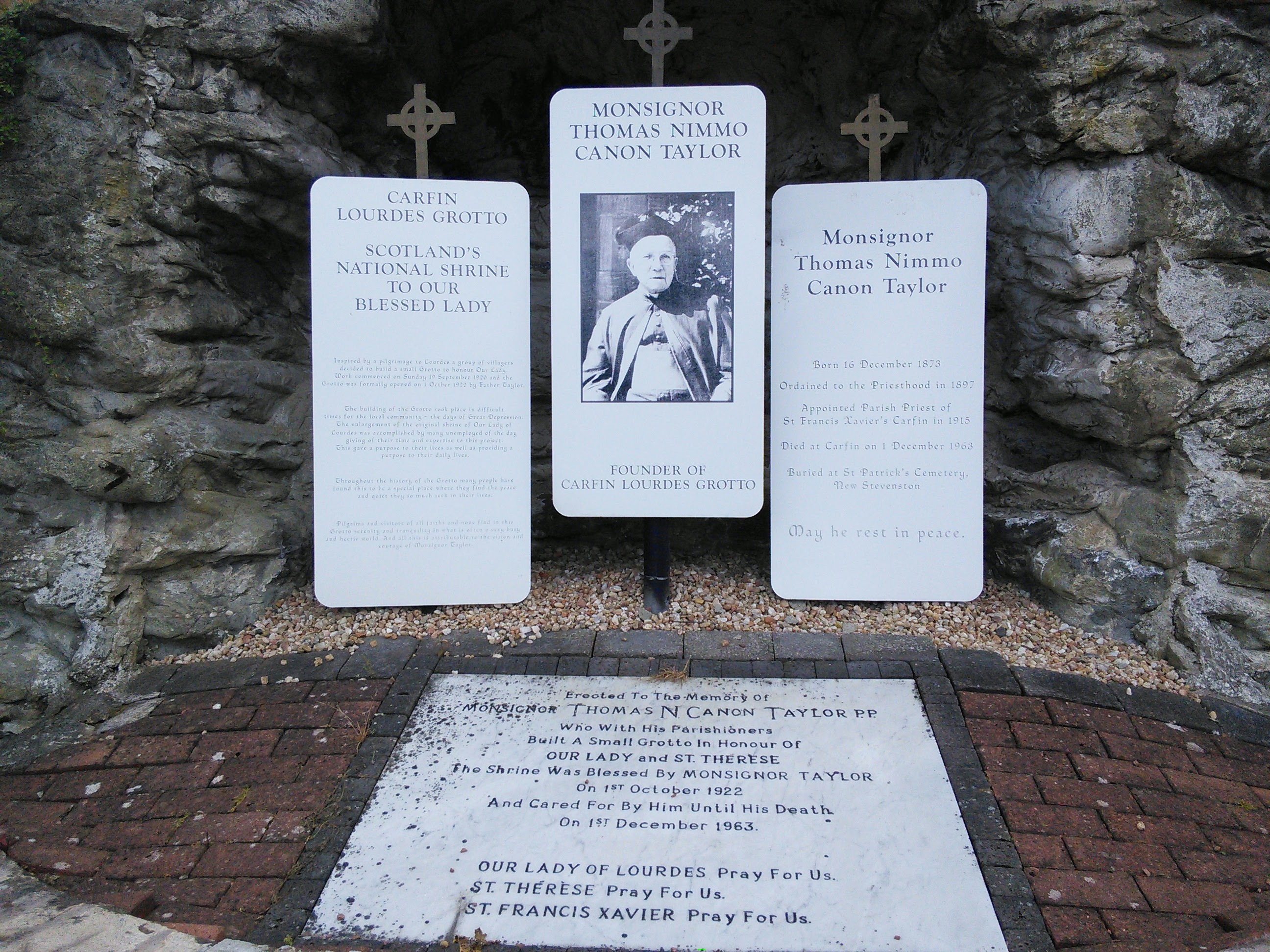
The History of the Grotto
Canon Taylor was the parish Priest of St Francis Xavier parish in Carfin, near Motherwell, Scotland. He led a visit of some parishioners to Lourdes early in 1920 and was inspired to build a replica of that shrine in Lanarkshire to give access to the many who could not go to Lourdes. With the help of many workers, out of work in the depression, he built a magnificent grotto which has become the National Shrine of Scotland.
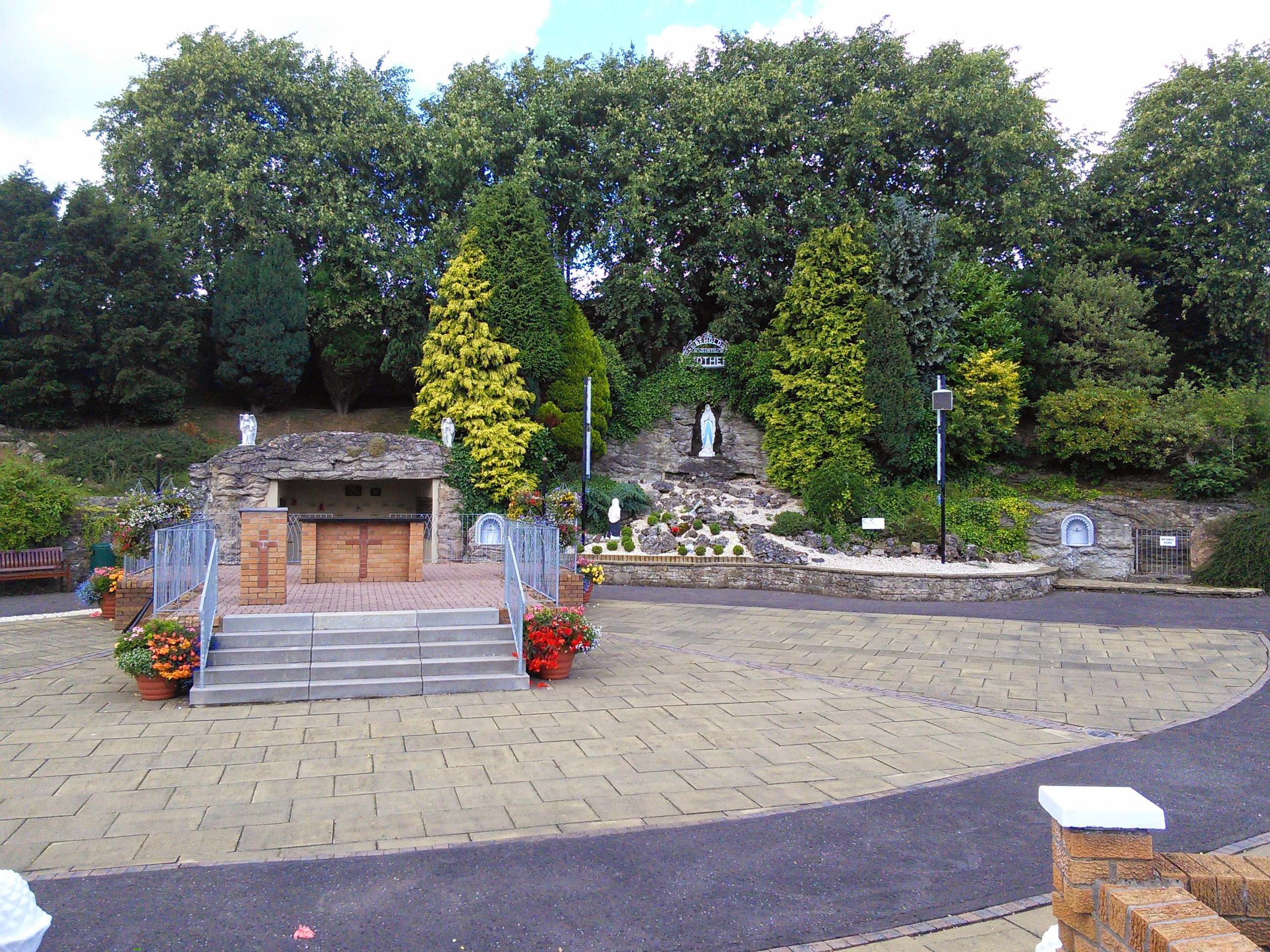
Saint Bernadette at the grotto.
The little grotto with statues of Saint Bernadette and Our Lady was the original part of tthe shrine which opened in late 1922. It has expanded greatly since then. There is the Saint Theresa Chapel which overlooks the site and has been a focus for pilgrimage masses and rallies for decades.

Another glass chapel was added in more recent times. The Glasgow Garden Festival was held on the banks of the Clyde in 1988 as a spur to regeneration of the old industrial areas of Glasgow. The site had a small glass chapel where visitors could go for a few moments of quiet reflection. After the Festival the site was being dismantled. The glass chapel had influenced many visitors and there was a demand for the chapel to be retained somewhere. In the end it was moved to Carfin and it now stands in the grounds of the grotto.
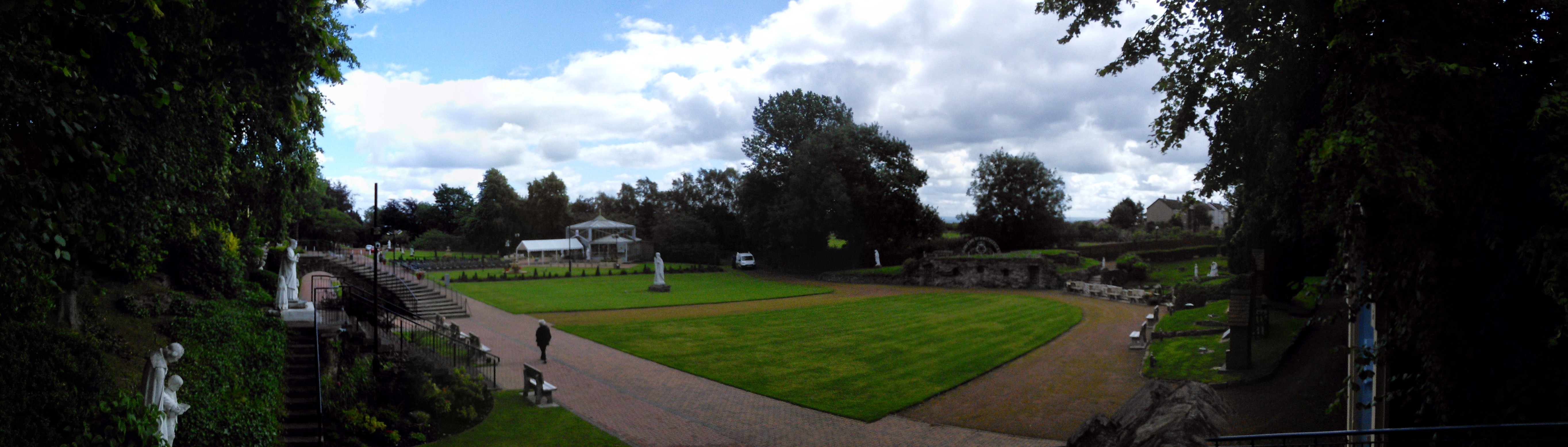
The chapel
There is exposition of the Blessed Sacrament in this chapel every weekday.

The Blessed Sacrament in the glass chapel
The one o’clock mass is always well attended by people from Lanarkshire and beyond. The chapel has become a favourite with many who feel a special quality in the tiny chapel.

Memorial to Irish immigrants.
One area of the grotto has a memorial to the victims of the Irish Famines of the 1840s and the immigrants who came to Scotland to find work.
The memorial was opened by the then Taoiseach Bertie Ahern on behalf of the government and people of Ireland.
The Irish immigrants and their descendants have formed a large part of the Catholic population of Scotland.
Other immigrants from Europe who came to Scotland to work in the iron and steel industry as well as the Lanarkshire coal mines have made their mark on the catholic population. They have also made their mark in the grotto.

The shrine is a popular stopping place for visitors and has a new visitor centre and cafe where you can rest and enjoy a lunch or just a cup of tea.
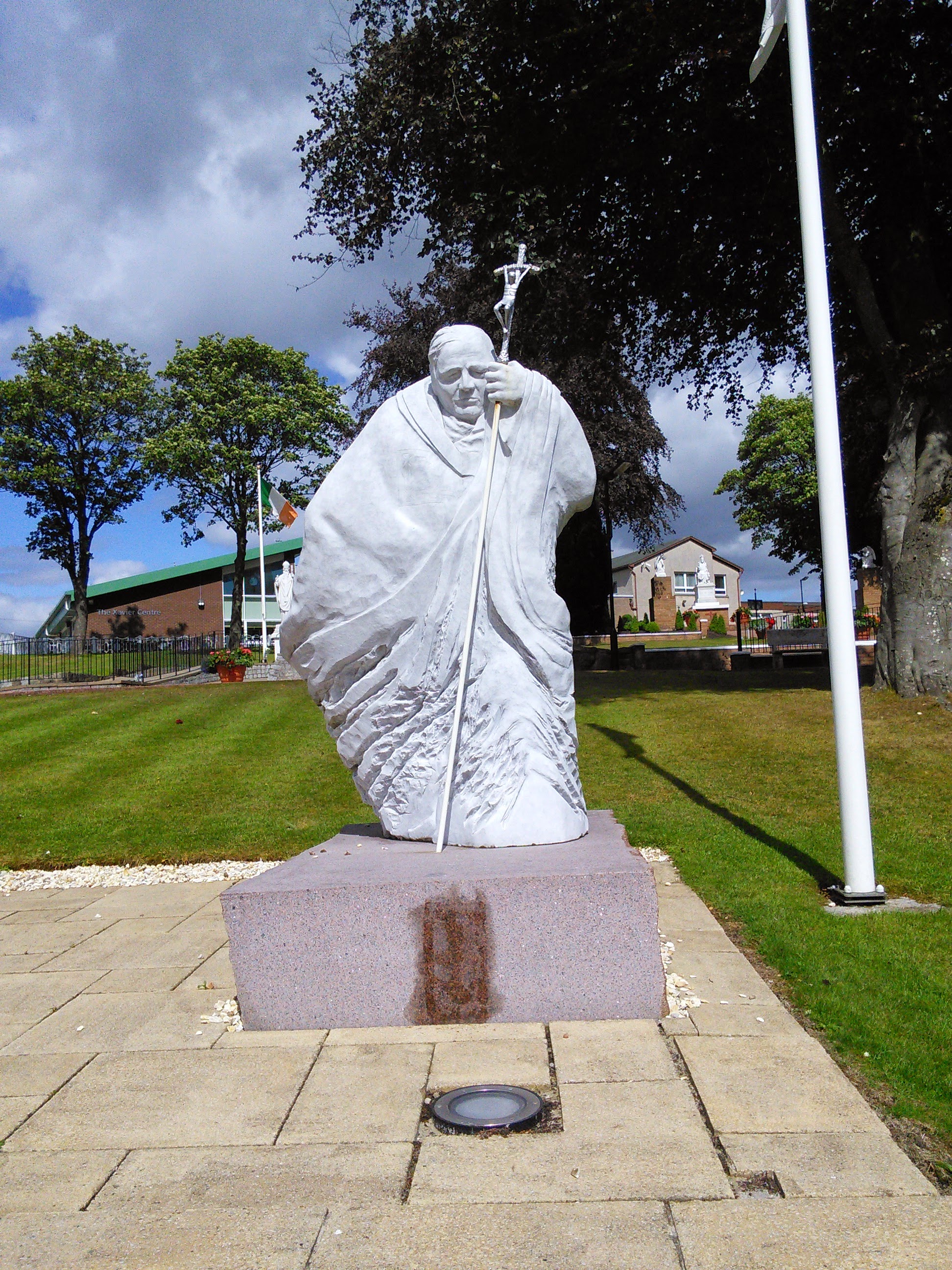
Pope John Paul II
The memorial to John Paul II marks the great love Scotland’s Catholics had for him.

John Paul Plaque
A hidden gem in the grotto is the Chapel of the Angels. This is a tiny, underground chapel, unknown to many of the visitors. When you go there (and you must) you should find this little chapel and spend a few minutes there. A prayer would go down well too.
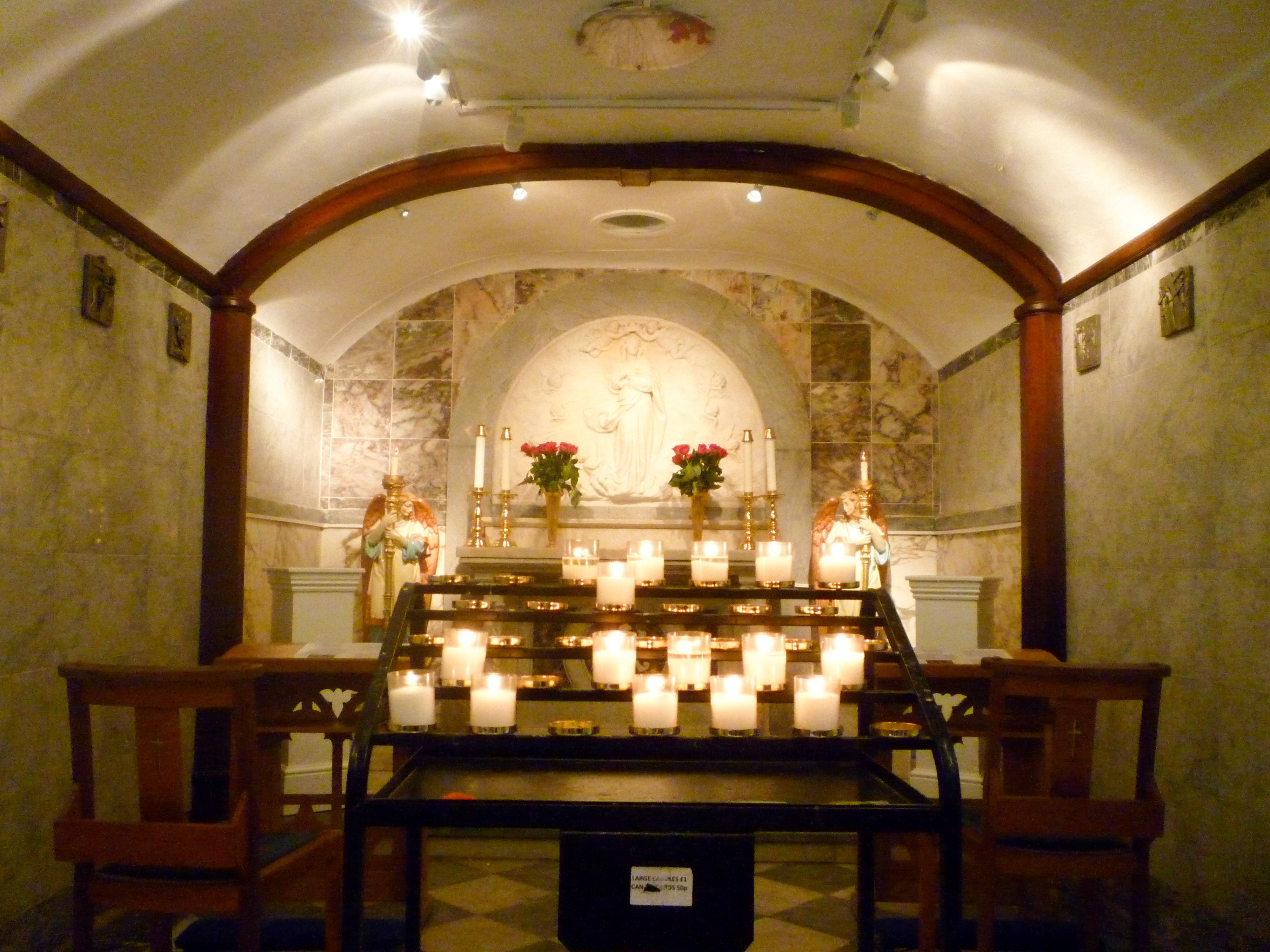
The Angel Chapel

No steering wheel?
It is reported that driverless cars will be allowed on UK roads next year. Many people are expressing concerns about safety. Mind you, the old story goes that the most dangerous component in a car is the nut behind the wheel, so perhaps removing that will prove to be no bad thing.
Years ago I read about traffic polls taken of cars crossing the Oakland bridge in San Fransisco. Chrating the number of occupants by year it showed that as time went on the number of occupants was steadily reducing as more people bought their own cars and became drivers rather than passengers. The statistics showed that if the trend continued, before the end of thetwentieth century one in four cars would be crossing the bridge with nobody in it. That was a fair joke back then but now it seems to be coming true. How are we taking the news?
I started off by saying that some people were expressing concern. Of course, most people don’t seem to be concerned. Why should that be? Perhaps we hav become accustomed to things proceeding without human control. Who sits and stares through the window on the washing machine to make sure that the clothes are being cleaned properly? We have become relaxed about lack of control. Our political systems seem to have gone the same way. The recent economic crash which the world is still trying to recover from showed that those who were supposed to be regulating the financial systems were doing nothing of the kind.
Policies in the UK just seem to go in a random, haphazard fashion. Take our outlook on homosexuality. In the recent past such things were deemed illegal and people could be prosecuted for behaviour that was deemed indecent. All that changed and the world became a more tolerant place. Now it is becoming illegal hold an opposite view. If you don’t believe that homosexual behaviour is acceptable you can lose your job. One intolerance has been replaced by another. Who is steering this place?
We seem to have a government in the UK where things just drift along from one crisis to the next; a bit like a learner driver who hasn’t got the hang of steering and manages to bash every car parked along the street as he passes. People might see a computer driven car as a much safer option than anything driven by our politicians.
No steering wheel? Well, what’s the point?
Well, the Commonwealth Games are underway and Glasgow is pulsating with games fever. The city has pulled out all the stops to make this a great experience for the athletes and all the visitors who have come to join in. Roads have been closed off, facilities taken over and peole are working all hours in the heat.
Yes – the heat! Who would have imagined that Glasgow would stay dry, never mind sunny during the annual Fair Holiday? The weather has surpassed anything we can remember for this time of year. The whole city is getting in on the act – even the old buildings.

Partick Image 1
Even the non-sporty types (like me) are enjoying the fun. It’s great to walk around the city with voices in various languages coming from all sides. At last we have no need to apologise to visitors for bad weather spoiling their visit. Glasgow is truly continental. This has been a wonderful experience for us and even although we know the weather can’t possibly last, we feel that Glasgow has lived up to all it promised – and more.

A gable end but not the end.
Thank you to all the workers who have prepared the city for the games and thanks to all the visitors – you are most welcome.

Jesus Falls the Second Time
This month I’m looking into the seventh station on the Way of the Cross. Jesus falls for the second time. The second fall should not be unexpected. Jesus was getting weaker with loss of blood. Yet a second fall brings with it the warning that this will continue. I wrote earlier about tripping on a kerbstone in Paris and the shock of the fall. The problem is when tripping becomes normal.
Last year I found myself suffering with sciatica. I thought it would go away by itself but it got worse. What can you do? I went to the doctor and he sent me for physiotherapy. I thought that was helping but found I was stumbling when I walk. It now appears I have a worn hip so I just keep taking the tablets. When I walk I sometimes find my foot doesn’t go where I meant it to go. Tripping and the consequent fall has become a feature of life now.
Jesus’ second fall is a metaphor for sin. Just like my occasional fall, falling into sin becomes a feature of life. We can think of a fall from grace or a fall into sin. Falling into sin makes sin sound like a trap and so it is. I don’t know about you but I can excuse myself by thinking that a sin is not serious or is not harming anyone. That’s the trap. Just like my problem with tripping falling into sin is a normal part of life. We need to be aware and ready for the unexpected.
Now, in sin, I’ve changed my perspective. I’m seeing things slightly differently. When my perspective is distorted my decisions get distorted too. I’ll give you an example. I’m six foot two and I can reach for things on high shelves but often get into bother because if you measure me I’m only five foot eight. I have a similar problem with cameras that don’t capture my full head of hair. I think you get the picture.
If my view of reality is distorted then my relationship with others will be too. My sin distorts my view of the world unless I realise that I am wrong and do something about it. To return to the analogy of the fall, you can’t get up unless you know you are down.
This was brought home to me recently when I read on Twitter about a woman in America who threw her children out of the window. That was disturbing, shocking. What was more disturbing were the comments added by other readers. They posted all sorts of suggestions about the sorts of torture that the woman should suffer.
The comments were based on the view that this woman is evil. Nobody suggested that she might be suffering from some psychological disorder and be in urgent need of help. Was this based upon the perception that we are good and guiltless and the woman must be evil? If so then we are in the trap of sin. None of us are without sin. Once we realise that we can look with compassion on others.
Another example I found in the news was the funeral of Fr. Kenneth Walker who was murdered trying to defend his fellow priest in Phoenix, Arizona. A group of protesters from Westboro Baptist church demonstrated with placards at the church. They are an unaffiliated church and have been demonstrating at the funerals of service personnel who died in Afghanistan. They claim that these things are God’s punishment.
I suppose that’s an old idea of God. It’s a picture of a vengeful God who is watching out for us to fall into sin and take revenge on us. Nothing could be further from the truth. Jesus came to save us, not condemn us. The sufferings and falls we contemplate in the Way of The Cross are how Jesus took the punishment for our sins. God is always ready to forgive. We just need to turn back to Him.
How often have you heard people talk about Catholic guilt? The story goes that we are brought up in an atmosphere of sin and guilt. This causes all sorts of psychological problems that are only solved when you give up religion. Of course it’s all nonsense. Being aware of sin and the effects of sin on our lives gives us the opportunity to change and improve life. As Catholics we have the sacraments to help us be reconciled with Jesus and rid ourselves of any burden we feel.
If we are forgiven, free of sin, then we are in a position to treat others in the same way. We should be able to “forgive those who trespass against us”. How much evil in the world is committed because of perceived wrongs others have done to us? There are wars in Africa and the Middle East caused by real and imagined wrongs. How much better the world could be if we were more ready to forgive.
We can look to South Africa for a great example of this. The black people in that country had faced oppression under the Apartheid regime for decades. Families had suffered great injustice and brutality. When the regime fell there could have been terrible bloodletting as people took revenge. Instead there was a system of Truth and Reconciliation. People could own up to what they had done and were forgiven. The bloodbath was avoided.
So how do we get out of the trap? It’s not easy. You know the story about the man who took a shortcut on his way home from the pub. He cut through the cemetery and fell into a grave dug for a funeral next morning. Try as he might he could not get out so he sat down to wait for morning. Soon another reveller fell into the same grave and tried to climb out. The first man tapped him on the shoulder and said “You’ll never get out.”. But he did with one jump.
Who can give us the tap on the shoulder? Who can help us out of the trap? Obviously Jesus is the one to turn to. In Jesus we can find the compassion we need to help us. We can find him in the sacrament of reconciliation. Some of us find that very difficult. We can’t shrug off the feeling of guilt and can’t bring ourselves to take that step into the confessional. In this second fall we see Jesus, in his agony, get up and take an even more difficult step. He encourages us to do the same.
I had a friend who had been away from the Church for years. After attending the funerals of two lifelong friends in succession he decided it was time to set things to rights. He told me he went to confession, ready for a hard time from the priest. He was surprised to find that rather than a hard time he was welcomed back and his sins forgiven. There was a visible change in him. He was a happier man in his dealings with everyone.
When we see Jesus get up from his second fall in the seventh station we should be reminded that no fall is too great for his compassion. No matter how far we fall or think we have fallen Jesus is there to help us up again. So let’s forget about guilt and concentrate on forgiveness. Jesus is ready to forgive us and we must be ready to forgive one another.
Joseph McGrath
My monthly column should be bublished early this month. I’m told it will be in this weeks issue of The Scottish Catholic Observer. It deals with the seventh Station on The Way of The Cross, Jesus falls the second time. Is this about falling over? What could it really be about? Does it have any meaning for you and me?
Get your copy of the paper this weekend. If you are off to Turkey or some other exotic place you can get the full text here next week.
Joseph
Life Savers
Apparently the Care minister has changed his mind on the Euthenasia question. He now thinks Lord Falconer’s bill should be supported. Even the former Archbishop of Canterbury has decided the time is right for us to choose death over life. In fact he goes further than the bill which proposes to relax the law in cases where someone is suffering a terminal illness. Lord Carey refers to cases of people with locked in syndrom but not in a terminal state.
And so it goes on. The half truths are being rolled out to persuade a compassionate people (thats you and me) the it is wrong to let patients go on suffering in pain and it is better to kill them. The half that is true is that it is wrong to let people suffer in pain. The half that is wrong is that it is better to kill them. Whe have the technology to relieve pain; that’s what the hospice movement is all about. Of course it is cheaper to kill people.
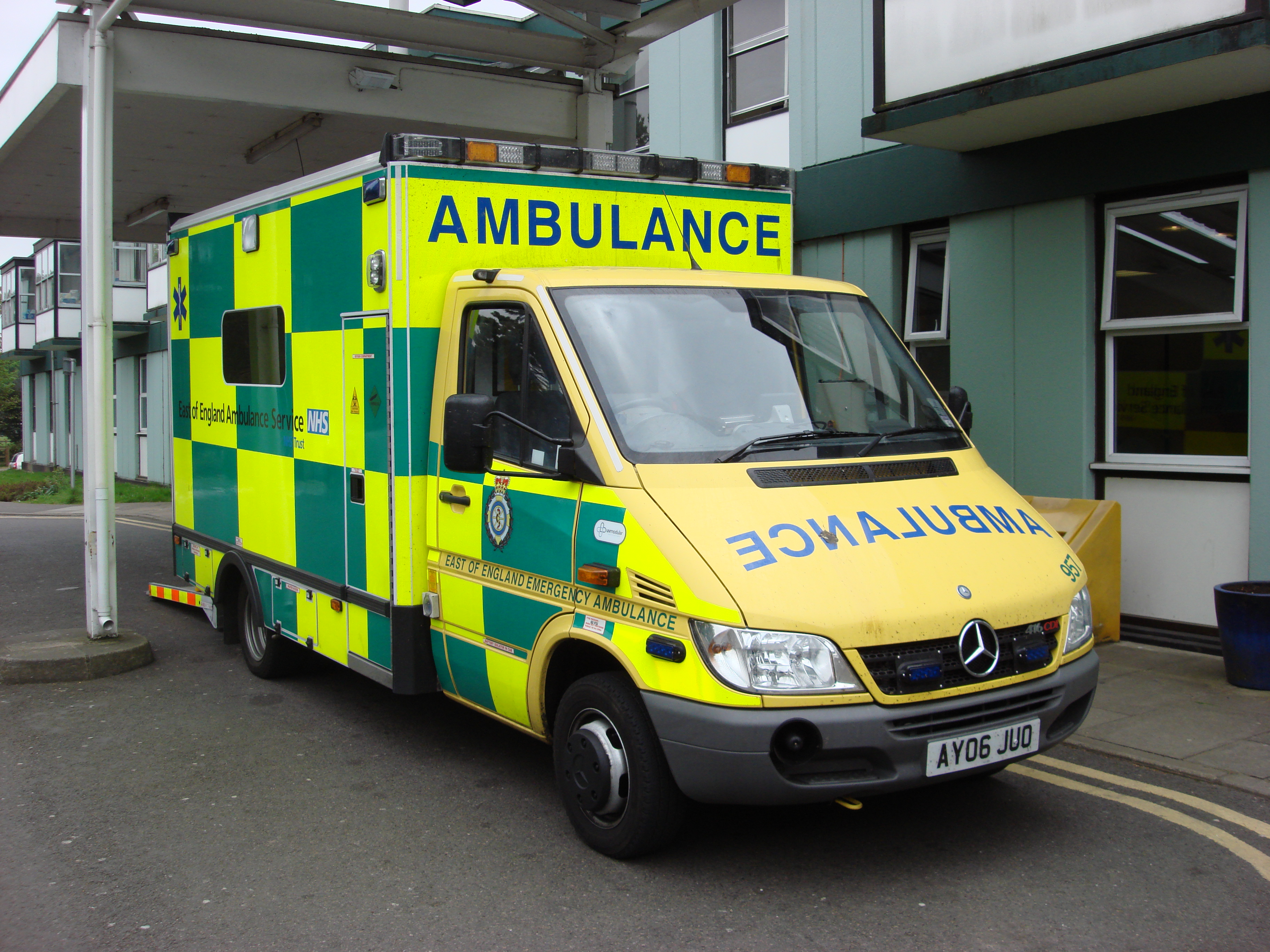
Life is fragile. We take all sorts of steps to support life. My twin grandsons were born seven weeks early almost a year ago and the technology and, above all, the wonderful, professional care they recieved in Glasgow hospitals helped them to live and I now have two great wee boys. We spend lots of money on pedestrian crossings to keep people alive when crossing the road. Our emergency services are there to save lives. Why all this? Because life is important. We are either for life of for death.
That might seem a simple choice but it is not. Life costs money. Hospitals, hospices and carers cost. Death, on the other hand, makes money. We make millions from selling weapons, bombs and bullets whose purpose is simply to kill. We are currently remembering the First World War. That war caused millions to be slaughtered in the most horrible conditions imaginable. It was called “The War to End All Wars”, to stop the killing.
In the second leg, World War Two, we saw the killing grow into an industry. Apart from the fighting we saw millions murdered by the German regime because they were ‘subhuman’, handicapped, politically different or someone you don’t like. The Neuremburgh trials punished some of the perpetrators. Unfortunately the lesson has not been learnt. When you choose death over life killing becomes the answer to all sorts of problems.
Some will point out that the bill is restricted to the terminally ill and will be regulated. Well, they said that about abortion and we see the number of babies killed soaring. The archbishop’s outlook on this has already moved beyond the terminal cases. It’s a slippery slope and we are about to step over the edge.
Just hope you are allowed to grow old without developing some problem that the ‘Death Squads’ will deem to be too serious and have you put down.
 Window On My World