Airwars – A Frustrating TV Series

This programme broadcast on Discovery History on Friday 11th July told the story of the battle of the Atlantic. It used some remarkable film and photographs of ships and aircraft. This is one of the series of history programmes from Dr. John Sweetman, Editor Matt Hale, series Producer Audrey Healey, a Cromwell Productions film.


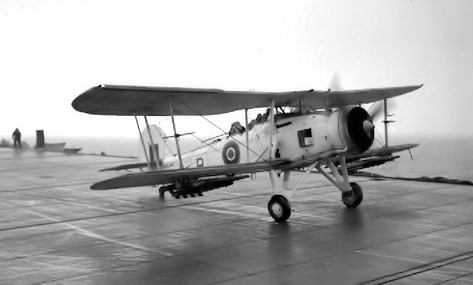
My problem with the series is the poor match between the commentary and the footage. In this film the commentary told of liberator bombers and showed flying boats; talked about Swordfish and showed Albacores. The text about escort carriers was accompanied by film of the USS Hornet and the Doolittle raid.


Swordfish

This is a Swordfish – Open cockpit

This is common in the series. We are told about Hurricanes and the film shows Spitfires. I’ve just spotted a Vietnam era carrier landing while the commentary is talking about escort carriers. Why do this? The only people who watch these films are old geeks like me who can easily spot the difference between a catapult Hurricane and an old American biplane


Albacore

This is an Albacore – closed cockpit

Why do I watch these films if they frustrate me so much? Well, the research is good and the film clips are great. They should be a great resource for anybody who wants to find out more about history. The problem is in the editing. The clips should be properly indexed so that the film editor can match the right clip to the commentary.


As one of the old geeks I think these resources should be properly preserved and indexed so that some of these little known aircraft will not be forgotten and not shown incorrectly labelled.


A great opportunity missed by careless media indexing.

Too Clever By Half?

A graduate

Is this guy too scary?

I see the politicians are promoting the idea of more people going to university to make them employable. See the BBC article here.

I wonder if this is really the case? Labour are arguing for ‘Technical Degrees’ that are not academic but focus on skills. This is to raise the status of technicians I imagine. I have two reservations about this.

First, I have found examples of the difficulty of having a degree recognised as worthwhile. My daughter with her first class M.A. and M.Lit with distinction was advised by the ‘consultant’ at the Jobcentre to remove any mention of a degree from her CV if she wanted to get a job. I assumed this was an isolated thing ’till yesterday.

A friend has just completed a Ph.D in his spare time. He is currently employed by B.T. but is about to be made redundant as the work he does is being sent to India. He was told to revise his CV and did so. On submitting his updated document he was berated by a senior manager for including his university qualifications. He was told that anyone with a degree in their CV would not get an interview in BT. The manager would not give details of his own university education.

It would appear to me that the problem we have is not one of lack of education in the applicants but we have the wrong people in influential positions in our industry, especially big companies. Let’s remember that BT was originally Poast Office Telephones which had the monopoly of telecoms and is now a poor relation in that field. Is it any wonder?

There is a malaise here in government bodies and some employers. They make the excuse of lack of education and training as the cause of unemployment. I think they are looking in the wrong direction. I remember a meeting of physics department heads being addressed by a representative of industry complaining that young people were not being taught the right skills. We asked him what skills he would like to see taught. “Honesty and reliability” was his reply. Not exactly skills and not something we often find demonstrated by governments and employers either if recent revelations are to be believed.

My second reservation is the idea that there are no suitable technical qualifications for the non-academic. There have always been good college courses and national qualifications. The problem is that industry is not giving the recognition these courses deserve. Changing the name to a degree will make no difference. Blaming the youngsters, the schools, colleges and universities is dishonest and serves no purpose other than to pass the buck. Government and employers need to shake up their ideas and put the right people in place to get the economy moving, with more jobs.

Are you too clever or are you afraid some young gun with a degree will take your job?

The 100 Year Old Man Must be Watched

“The Hunderd Year Old Man Who Climbed Out Of The Window And Disappeared” is a film of the book by Jonas Jonasson. It concerns a man who decides to skip the birthday party being organised in hs old folk’s home and go off on an adventure.

The may seem implausible and the outcome unlikely but I laughed. You will laugh too and cheer on the old fellow. Director Felix Herngren and the cast Robert Gustafsson, Iwar Wiklander and  David Wiberg have made a memorable film. It might help you to change your outlook on life and open up new possibilities.

I don’t want to go into detail to spoil the film for you but suffice it to say that tomorrow morning might just see a man climbing out of the window of this house. I may not be around for a while.

If you don’t believe me have a look at the trailer here

http://www.youtube.com/watch?v=6SEiaODjTZw


Old Prophesy, New Times

At mass today I was struck by the Old Testament reading.

It’s a reading from the prophet Amos and was obviously written a long, long time ago. Despite the age of the passage I found it amazingly pertinent to the world today. In our period of austerity imposed by the Coalition government the poor have been badly hit and the rich seem to be prospering. This is obviously nothing new as Amos rails against those who cheat the poor.


I repeat the passage here.


Amos 8:4-6,9-12

Listen to this, you who trample on the needyand try to suppress the poor people of the country,you who say, ‘When will New Moon be overso that we can sell our corn,and Sabbath, so that we can market our wheat?

Then by lowering the bushel, raising the shekel,by swindling and tampering with the scales,we can buy up the poor for money,and the needy for a pair of sandals,and get a price even for the sweepings of the wheat.’

That day – it is the Lord who speaks –I will make the sun go down at noon,and darken the earth in broad daylight.

I am going to turn your feasts into funerals,all your singing into lamentation;I will have your loins all in sackcloth,your heads all shaved.

I will make it a mourning like the mourning for an only son,as long as it lasts it will be like a day of bitterness.

See what days are coming – it is the Lord who speaks –days when I will bring famine on the country,a famine not of bread, a drought not of water,but of hearing the word of the Lord.

They will stagger from sea to sea,wander from north to east,seeking the word of the Lordand failing to find it.


I wonder how that would be received by our government today. They have recently prompted the idea of teaching our young people traditional values. Well traditional values would be old values and you don’t get many older than the Old Testament.


Do you think the Coalition might recognize themselves in the passage? Perhaps that’s just seeing it my way.

The Sixth Station: Veronica Wipes the Face of Jesus

The Sixth Station

Veronica Wipes The Face of Jesus


This month I’m looking at the sixth station, Veronica wipes the face of Jesus. This is a really puzzling station. In our story of Jesus men seem to get the main parts. Peter gets to be the head of the Church. John gets called the beloved. You can understand how people see the Church as a man’s world with women in the back ground. I’ll not get into the discussion on woman’s place in the Church, not today anyway.


This station gives us pause for thought if we think women have no prominence in our story. We have been considering the final journey of Jesus as he walked to his death. The scene is one of brutality, oppression and fear. Where are Jesus’ faithful companions? One of them has betrayed him and the others have run off. Jesus is struggling under the weight of the cross, his loss of blood so weakening him that Simon has been pressganged in to assist him. The crowd is shouting abuse and the guards are pushing them back. Into the middle of this Veronica forces her way through the crowd, ignores the guards and places a towel on the holy face. The face is streaked with blood from the wounds on his head. Veronica absorbs the blood on the towel to give a little comfort to Jesus. As she is pushed away she is left with the imprint of the holy face in blood.


I have no scriptural evidence for this but it is traditional. It is interesting to note that the name Veronica comes from the Greek icon meaning image and the Latin vero meaning true; the true image. The tradition seems to have come from the Eastern Church and became popular in the Roman rite about a thousand years ago. I’m more concerned about the message this story has for me than the history.


The first thing that strikes me is the courage displayed by Veronica. Many Jews had become followers of Jesus, some of them prominent like Nicodemus. Yet even prominent men were afraid to come forward to intercede. It was this lone woman who broke through the crowd and ignored the soldiers to bring some small relief to Jesus. The amazing thing is that she got away with it. Why did she act in this way?


I have no doubt that she was inspired by the Holy Spirit. There lies the first message. When the Holy Spirit moves you, you have nothing to fear. You will succeed. Now I had always imagined that the Holy Spirit would act through the Apostles, their successors in the Church and the saints. Veronica was just a wee wummin as they might say in Glasgow. She was not one of the elite; a bit like you and me. The message is clear. Be prepared to act as an instrument of the Holy Spirit. As ordinary people we can and will be called upon to act.


It may not be in a dramatic way like Veronica but in a small way. It might be to give that kind word to a stranger that gives them encouragement to carry on in a difficult situation or you might be moved to speak out against an injustice. The words just come to you. I remember Magnus MacFarlane Barrow describing how he came to found Mary’s Meals. He was just an ordinary young man, too shy to continue his university course who found himself starting a charity. He didn’t recognise what was happening at first but when he did he followed the Spirit. You know the rest.


The second message I get from this station is about the role of women in the Church. Not just women but all of us ordinary people. Critics of the Church often point out that we are a church of men and women are only good for making the tea. I think that is to fail to see how the Church works. It is true that our priests are men and the hierarchy is exclusively male. However, the vast bulk of the Church is not comprised of clergy and religious.


The Spirit acts through all of us. I think of the hierarchy as the management, the priests as specialists who alone can bring us to Christ through the Eucharist and the rest of us as the workforce whose job it is to get on with the work. The Church is not a club we join, pay our dues and draw the benefits. The Church is a way of life, new life in Christ.


Now I can hear the voice of reason tut tutting in the background. That’s all very well but we have lives to lead, families to look after, work to go to. We live in this society and we must fit in. We go to mass; we say our prayers. What more do you want?


I’ll let Veronica answer that. I’m sure she prayed and fulfilled all the requirements of the Jewish faith. Veronica did not stop there and she certainly did not fit in. She didn’t just stand out from the crowd; she elbowed her way through it. Do I stand out from the crowd or do I just try to blend in so that nobody will notice me? Veronica has shown us a great example. What she did was just a simple thing, mopping the face of a man in pain. The thing is, she did it publicly, her actions in stark contrast to the baying of the crowd. We don’t need to fight the world, we just need to be seen to live as Christ taught us and be a living example for those who don’t share our values. It takes a little courage to stand out. Where could I find the strength to live like that? I’ll have to double my prayers to the Holy Spirit.


The last message I see in this station is about the image that was left on the cloth Veronica used. At school I learned that Jesus left this image of his face as a reward for Veronica’s kindness. As Christians we are all seeking the face of Jesus. There are all sorts of pictures made by great artists but none of them is the real face. It’s not uncommon for great leaders to have their face shown to everyone. Kings, queens and presidents all have their image in the newspapers and on television.


Jesus is not going to appear on the box one night as we sit down to watch the news. If we want to see his face we must seek it out. I feel I need to take a leaf out of her book. I should be living my life as a true follower of Christ. If Christ’s teaching is at odds with the norms of my society then my life should reflect his teaching and be seen to do so. Do I meet the beggar is the same way Christ did? Do I speak out against falsehood and wrongdoing?


Perhaps if I try to live more like Christ and see people as he did, not just strangers but fellow children of God, loved by God just as much as I am, then I might just reach my goal and see God, face to face as it were. I’m fairly sure that if I continue to ignore my responsibilities to my neighbour then I might end up seeing a face I’d rather avoid.


How Do You Measure Up to a Wee Wummin?

My June column will be published today in the Scottish Catholic Observer. It concerns the Sixth Station of the Way of the Cross. Veronica wipes the face of Jesus.

What would you have done in her place? Buy the paper this weekend and see what I have to say.

British Values

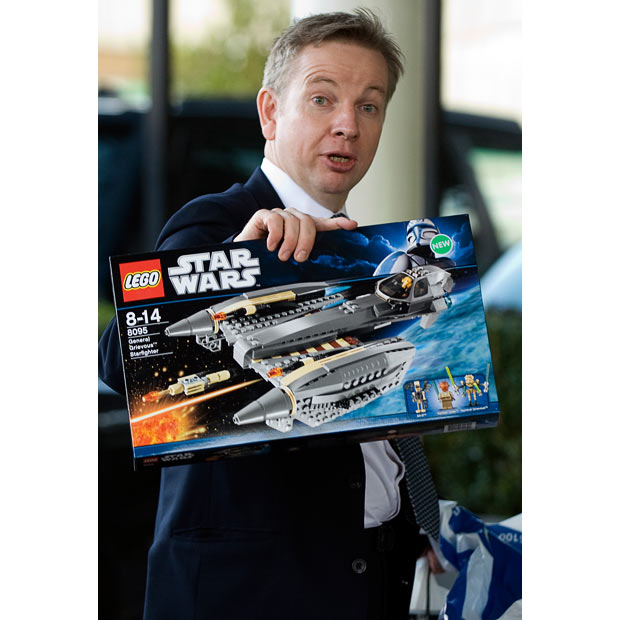
Wee Michael

In a galaxy far, far away

The Tory Education minister wants all schools to teach British values. Every pupils should learn about what we, as a sociey, value in a person. He was supported by the prime Minister.

Mr Cameron said: “I would say freedom, tolerance, respect for the rule of law, belief in personal and social responsibility and respect for British institutions – those are the sorts of things that I would hope would be inculcated into the curriculum in any school in Britain whether it was a private school, state school, faith-based school, free school, academy or anything else.”

Surely we could add truthfulness to that list. I wonder why he left it out? I also wonder why the government think that schools are the right place for these values to be inculcated? Surely basic values are learned at home in the first isntance. Our young people can learn these values from the way our society operates. Take freedom for instance. Young people will see that we are free to express our views about anything and demonstrate in public in support of our views without interference or kettling by the police. Well, perhaps not.

Tolerance is a basic value we live by in the UK. We tolerate people’s religious beliefs and don’t penalise them for operating in accourdance with their religion like Catholic adoption societies who try to place children in hetrosexual families. We don’t force them to close, er, well apart from that kind of thing.

The rule of law is important in our society. So much so that we have a legal aid system that provides defence for people in court. We don’t stint on that kind of thing because the rule of law is one of our values. That’s right, isn’t it? Isn’t it? No? Oh!

The belief in personal and social responsibility is paramount in Britain. We can see that in the way that bankers who brought the economy to it’s knees were charged and brought to court. Those bankers who mad fortunes from wrongfull selling of PPI and caused the Libor scandal heve been charged for their crimes and jailed. Well they are going to be charged, tried and jailed then. Oh, they are not being dealt with by the law but the banks have to pay back the money, if you can catch them, well that’s surely personal responsibility. You are responsible for catching the bankers who have robbed you. Simple!

Respect for British institutions is a no – brainer. Who could fail to respect the police who shot the terrorist Jean Charles de Menenzes before he could do any damage with the explosives he was wearing in his puffer jacket, which he wasn’t wearing anyway and then lied about it when it turned out he wasn’t a terrorist. The officers in charge of the force were severely knighted as a punishment. We respect institutions like parliament where the ministers fiddle their expenses and give a short, cursory non apology and that’s an end of it. We must respec t the coallition government who stand up and admit that the problems we face are someone else’s fault.

I’m also interested in “anything else”, as in “private school, state school, faith-based school, free school, academy or anything else.” What else is there? What does that mean, Sunday school, night school, card school? This isn’t just some vague waffle is it? Surely this is something we can learn to respect, just like Dave and wee Michael.

Another Great Read from Gordon Ferris

Gallowglass
“Gallowglass” is the fourth Douglas Brodie novel from Gordon Ferris. I confess I couldn’t wait to read it. I have enjoyed all the Gordon Ferris books so far and this one did not let him down.

It’s not every book that starts at the funeral of the hero. This one does and it left me with a feeling of regret. I’ve grown to like Brodie and the though of no more adventures left a gap. However the action in this story made up for that.

I love Ferris’ use of the post war Scottish landscape as the background to the stories. Those of us who came into the world in a post war Glasgow can relate to his locations. I don’t think these stories would work in any other place.

The book is fast paced and is literally a page turner – thought I read it on Kindle which is not quite the same as flipping paper over. The characters are believable and some, loveable. You will never regret starting this book and might share my sense of loss when it is finished.

My May Column – Simon of Cyrene

Way of the Cross 5


Simon of Cyrene is made to carry the cross.


Simon had come into Jerusalem, presumably to celebrate the Passover. He is mentioned in the gospels of Matthew, Mark and Luke. In Mark’s gospel he is named as the father of Alexander and Rufus. I assume from that he was known to the disciples.


Simon was probably expecting to spend the festival with friends and enjoy the event in good company. He could never have expected that he would be accompanying a condemned man and playing a central role in his final walk to his death. This would be a very public role. He would not be in the background but would walk step by step with the figure of abuse. Simon would share the abuse.


Simon had come into the city for the Passover. He would expect to share in the Passover meal and the rituals it involved. He would spend the evening with his friends enjoying the singing, storytelling and catching up with all the latest news. Perhaps he expected to learn about the events surrounding Jesus. Instead he found himself right at the centre of the story.


I wondered why Simon was at the centre of this story. He was not one of the disciples. We never heard of him before this and he was never mentioned again. Why is he shoved in front of us so boldly? Who is he? Then it struck me. Simon is really me, or perhaps a model for me. He found himself in a difficult situation, much against his will, but he got on with it and carried the cross.


You must have found yourself in situations like that. You are busy; you have plans. Then you are called upon to help someone. Perhaps they ask for help or someone directs them to you. You may not know them or worse, you do know them and you don’t get on with them. What do you do? Do you help or do you walk away? Why should you be put in this situation?


You are busy. I know I am. Just ask my wife; when there is cleaning to do or dishes to put away then I usually have something important to do. There is so much to do and so little time. Sometimes we are too busy to get involved with other people, sometimes even too busy for God. Perhaps we don’t pray as often as we should. Mind you, there are those times when a prayer springs to our lips moments of danger or times of worry. We pray for help from the only really reliable source, God.


What do we expect in answer to our prayers? When that young guy in his sporty car cuts in in front of us and we feel that a collision is imminent we instinctively call on God. What are we expecting? Is it angel Gabriel swooping down and pulling the car away? When we are confronted with a difficult situation and pray for help do we expect God to pop in and sort it out? That’s not how it works.


What usually happens is that someone comes along and we find a solution. God answers our prayers by using other people to help us. The person who helps usually does not realise that they have been used in this way. It’s not unnatural to feel put out at having to help someone when you are busy. Even Jesus experienced this.


In St. John’s gospel we read about Jesus and his mother at a wedding in Cana in Galilee. As we all remember, the wine ran out causing a worry for the family.

When they ran out of wine, since the wine provided for the wedding was all finished,the mother of Jesus said to him, “they have no wine”. Jesus said, “Woman, why turn to me? My hour has not come yet.”

John 2: 3,4

Jesus found himself in the situation that many of us encounter. Despite his reluctance he sorts out the problem. Admittedly, I would be at a loss in turning water into wine, but rest assured we are never called on to help when we are not capable of sorting the problem out.


Simon’s example is, perhaps, an extreme one. He was made to suffer the abuse along with Jesus. Sometimes we can suffer similarly when helping someone who is regarded as bad or otherwise unworthy. How often have you heard someone comment on the lawyer defending a notorious murderer saying “How could they defend someone like that. They should be ashamed.” Defence lawyers can suffer in the same way as Simon did.


The same sort of thing can happen with those who help asylum seekers or speak up for human rights. They become associated with a group who might be looked down on. I recall speaking with volunteers who worked with the Society of Saint Vincent de Paul. They were finding it difficult to recruit new members. They found that people would happily give money to help but didn’t want to be associated with the poor.


So, if Simon is a model for me, what sort of changes should I be looking to make in my life and my attitude to others? I think I need to start by asking myself if I am really willing to help others. Am I up for carrying the cross? When someone is in need of help do I notice? Am I blissfully unaware of their plight?


I mentioned the Society of Saint Vincent de Paul. The volunteers there, by joining the society, have made room in their lives for the problems faced by other people. How will I make room in my life for others? There are plenty of organisations in need of volunteers who are willing to help others.


Now you might complain that I am suggesting that we all need to change our lives. You would be absolutely right. I think that is what being a Christian is all about. Jesus came to change the world. He created a Church to carry on his work. So to be a Christian is to be someone who wants to make changes. The changes must start with ourselves.


A few years ago on a visit to Uganda our host told us we would be given a tribal name. This is common practice there. One woman followed us around and observed how we acted and what we did and at the end of the week there she gave us our tribal names. My name was Atwoki. I was told this meant ‘Leader’.


On further travels in the country we were asked for our tribal names and I responded with Atwoki. The reaction that brought convinced me that Atwoki did not mean ‘Leader’. Rather I suspect it means something like ‘grumpy wee bald guy’.


There’s not much I can do about the bald bit but I’m sure I could be less grumpy. When we all meet together in front of the throne of God and face our final judgement we might be assigned a name that reflects our performance here during our life. I’d be ashamed to stand there and be exposed as someone like Atwoki who is self-important. I’d much rather be seen like Simon who helped Jesus carry his cross.


Joseph McGrath


Remembering D-Day?

The 6th of June is remembered as D-Day, the day that allied forces forced a landing in Normandy that helped chande history – for the better. The media is full of D-Day. Newspapers are full of it, television replies with a barrage of interviews, film and re-enactments. This is seventy years on.

A few years ago I ment an old veteran in Dunbar. He claimed he was the oldest surviving veteran of the landings. I have no reason to disbelieve him. He told me about the celebrations of the sixtieth anniversary. He was one of a group of veterans who were taken to France to take part in the ceremonials. They were greeted by the world leaders. He recalled that the British leader responded to one of the veteran’s jokes as though he had been insulted. “No sense of humour”, the veteran concluded.

A politician would regard such a ceremony as above humour. It would be spoiled by trivia. The soldier might not agree. If they took the war too seriously they might never have survived. Dark humour helped many soldiers cope with the horrors they experienced on the beaches and beyond. It is the soldiers, after all, who are the only ones who can remember D-Day. They were there and experienced it. Those of us who were born after the war have only experienced the movies and they could not possibly convey the horrors, even if they tried.

How did soldiers cope with their experiences? The truth is many did not. Many veterans carried on with apparently normal lives after the war but nobody knew of the nightmares that blighted their lives. Some turned to the bottle. I had an uncle who had drink problems. He never spoke of the war but recently I learned he had been at Dunkirk and had fought his way from the Normandy beaches into Germany. How can we possibly understand the effects of war when we don’t know what really went on?I knew one man who flew Spitfires over France. His family didn’t see any significance in that. They knew little of what he did or saw.

The heroes of the European war were ordinary men. They went back to their ordinary jobs after the war and nobody really knew what it was like. They carried the effects into those ordinary lives and that has shaped our society in a subtle way. Some went into politics and had gained the wisdom to avoid wars where possible. Today we have politicians who only experienced war through the eyes of Hollywood. Is that why we have marched into so many conflicts in this new century?

If we want to remember wars then let it be a memory of the evil that is war and try to avoid it. The pomp and celebrations are all a bit late now. Let’s hope there are no plans for 2024.