Do you feel free to speak out?

The Apostles felt free to speak out after Pentecost. Perhaps they were mistaken? They went out to change the world. What are you changing today?

You can read my thoughts in my column in today’s Scottish Catholic Observer. Full text here next week if you miss it.

The Morning After

After the resurrection we would expect everything was fine. The disciples would be on track to convert the world.

Well it didn’t turn out that way. Things seemed pretty bleak for Christians. Does this sound familliar? How does today’s world reflect the events of the early church. See my column in the Scottish Catholic Observer this weekend.

Don’tworry if you miss it. The full text will appear here next week.

My Column – The Resurrection

The angel awaits the apostles.

The Empty Tomb

The final article in this series is published today in the Scottish Catholic Observer. What does the resurrection really mean for us? No, really mean?
Get your copy this weekend or come back here next week for the full text.
The whole series is published on Kindle here

Find this on Kindle


Jesus is Laid in the Tomb. The 14th Station on the Way of The Cross

Jesus burial

This month sees us reach the end of the traditional way of the cross. What’s so important about being laid in a tomb? Of course we are not finished yet!

This week sees this article published in the Scottish Catholic Observer. Get your copy in your local parish. The full text will be here next week.

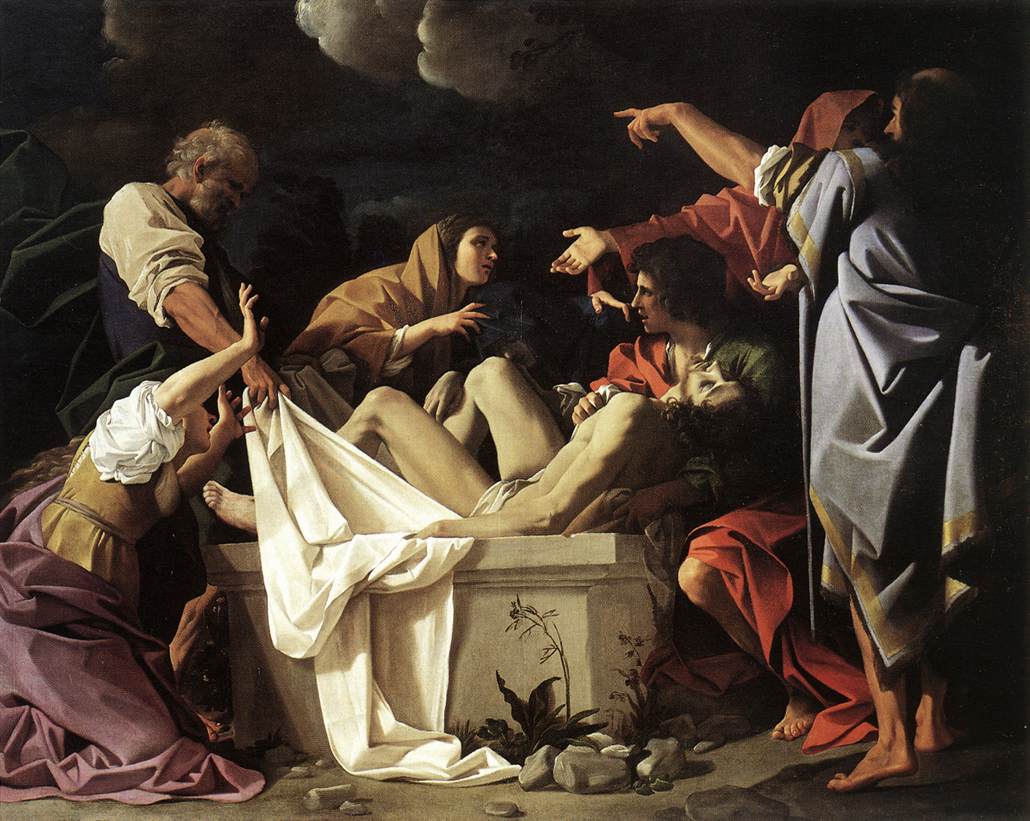
The Thirteenth Station Jesus is Taken Down from the Cross

Christ on the cross

What’s so strange about removing a corpse?


This is the station I have been worried about. What is there to say about it? Of course Jesus is taken down from the cross, that’s what we would expect, isn’t it? What more is there to say? What message can we take from this station? Well actually there might be more to this than first appears. The Romans used crucifixion, not only as an execution but as a warning to others. The bodies were usually left to hang on the cross, visible to all who travelled into the city. This would terrify anybody who was thinking about opposing the mighty Roman army. Anybody seeing the decaying corpses would think twice and probably keep their thoughts to themselves.

In this case the body of Jesus was released that very afternoon. He was not to be left hanging as a warning to others. This seems to break the tradition of Roman crucifixion. According to the Gospel of John,

After this, Joseph of Arimathaea, who was a disciple of Jesus – though a secret one because he was afraid of the Jews – asked Pilate to let him remove the body of Jesus. Pilate gave permission, so they came and took it away. Nicodemus came as well – the same one who had first come to Jesus at night time.

John 19: 38, 39


I noticed that only John mentions Nicodemus in his account. The other three evangelists say nothing about him. I’ll come back to that later. If it was the custom to leave the bodies to rot on the cross why did Pilate readily agree to Joseph’s request? Why did the Jews not object? There’s more to this than meets the eye.

What happened at the death of Jesus that seems to have caused this change of heart? Looking back we see that when Jesus died on the cross there were great signs. Matthew recounts them.

At that, the veil of the Temple was torn in two from top to bottom; the earth quaked; the rocks were split; the tombs opened and the bodies of many holy men rose from the dead.

Matthew 27: 51, 53

I think it is fair to say that people knew that something terrible had happened. The centurion is quoted as saying “In truth this was a son of God.” Even the heathens knew that this was no normal execution. I wonder how those responsible felt about their part in this when they saw those signs? Pilate of course had been warned by his wife and was reluctant to become involved. His hand washing at the pavement was his attempt to avoid any blame.

Have you ever had an instance of a child breaking an ornament and then hiding it under the sofa, pretending it had never happened? I think the authorities were behaving like that. The removal of the body, hiding it in the tomb was their denial. They were anxious to have the whole business forgotten, swept under the carpet. Of course we know now that that is not what happened. Things took an entirely different course altogether.

The apostles seem to have been in shock. This was not what they had expected. The triumphal entry into Jerusalem a few days before seemed to promise a great future for Jesus and for them. Now they were in hiding and everything seemed to have come to nothing. Peter, who had been made the head of the Church by Jesus had denied his master and was riven with guilt. The ‘Church’ was in disarray.

This is where Joseph of Arimathaea and Nicodemus come in. We met Nicodemus earlier in the gospel story. He had come to Jesus in the night. He was a prominent Jew who came to believe in Jesus. He came out of darkness into light. Joseph of Arimathaea is said to be a secret believer. He was afraid to show his belief for fear of what the Jews might do to him. In the story so far they are nobodies. They have no prominence.

Now, when it all seems to be falling apart, it is these men who step forward and take charge of the body of Jesus. It is they who place Jesus in the tomb. This would normally be something a family would see to. In a sense we are seeing a new definition of family. Joseph and Nicodemus step up and ensure that God’s plan will proceed.

The authorities would have expected the execution of Jesus to scare off any followers of Jesus and, as we see in the case of the apostles, it worked. Strangely enough it was the people who had been afraid before who now acted. We see a transformation in those who, like Joseph and Nicodemus, had been afraid but now put their fear behind them. The crucifixion had strengthened their faith rather than destroy it.

This is something I had not realised before. When the Church was in its first crisis it was not the apostles who pulled it together but just ordinary followers. That rang a bell with me. The Church in Scotland found itself in a crisis again recently when the Cardinal admitted some wrongdoing. The media appeared outside the cathedral in Edinburgh to ask the Catholics coming out of mass how their faith had been affected by the revelations. I remember two Edinburgh ladies explaining that their faith had not been shaken at all. Their faith was in God, not in any of the priests, bishops or cardinals of the Church. In the days that followed ordinary Catholics rallied and showed that the Church is still the Church started by Jesus no matter what foolishness we humans bring to it.

So the message for me in this station is in the nature of a question. What kind of follower am I? When things get difficult and the Church is held up to ridicule what is my reaction? Am I tempted to shut myself away from it all? Perhaps I’m the kind of Catholic who might like to distance myself from it all. Perhaps I’ll find myself saying that I’ve always had my doubts and now I can see how wrong we were.

On the other hand I might be the kind of Catholic who sees the Church as my home. Am I the sort of Catholic who sees the Church as something made up of people rather than an organisation that I can join while it suits me? I hope I see myself as part of the family that is the Church. I hope I’m the sort of Catholic who smiles when he listens to people who say the Church should share out all its wealth with the poor; a smile because the wealth of the Church is the faith of its people. I’ve been lucky enough to witness that treasure being shared out to the poorest people in the world by priests, nuns and many lay people. It is those who give of themselves, not those who only give some money who are sharing out the treasure of the Church.

The message in this station is easy to ignore. We can just Look up at the image of Mary holding the lifeless body of her son, recite “I love you Jesus, my love above all things.” and then move on to the next station. Perhaps, though, we might pause and ask ourselves whether we would join with Nicodemus and Joseph of Arimathaea and keep God’s plan on track. They found themselves in the most difficult of times and found their faith strengthened. Perhaps these difficult times will strengthen our faith.


Joseph McGrath

Good News – The Wait is Over!

Yes, my January column is published this weekend in the Scottish Catholic Observer. I know it is February but we had a big splash on SCIAF last weekend ( hope you read that) and some things are worth waiting for.

I hope this one was worth waiting for. What’s strange about taking a body down from the cross? If you miss this week’s edition the full text will be here next Friday.

My January Column – Where did it go?

It looks like my January column in the Scottish Catholic Observer is not in this week’s edition. That’s not a problem – I think it will be in next week. This week, however, we have a large spread on the work of The Scottish International Aid Fund (SCIAF).

SCIAF was born in my home parish of Saint Columbkille’s in Rutherglen and has made unbelievable changes to the lives of some of the poorest in the world. You really need to see this weeks paper to get a flavour of what they are doing.

Try again next week for my article.

Jesus is Nailed to the Cross – Full Text

A crucifix

The large crucifix in Nigeria

The 11th Station Jesus is nailed to the cross


In this series of articles I’m taking the Way of the Cross and pondering on what each station is saying to us. I must stress that these are personal thoughts and if they seem a bit strange then that’s about me rather than the Church. The eleventh station recalls that Jesus was nailed to the cross. We are all familiar with this.

I grew up in a house with a crucifix on the wall. My rosaries have a small crucifix on the end. Jesus nailed to a cross has been the wallpaper of my life. Every church I visit has at least one crucifix. Some are small and some are large they are all works of art. I expect to see a crucifix on a church, a classroom wall, in a home. It is just a familiar item.

A few years ago I read an article by a woman who had gone into a church and was shocked by the sight of a man nailed to a cross – a crucifix. What sort of people are these who have horrible things like that in their churches? I was shocked at her reaction. Had she never seen a crucifix? Where was she coming from?

In my Missio life I was on a visit to Nigeria and stayed for a few days in a parish in Lafia. I wandered into the church where the ladies were preparing for the harvest festival mass. The crucifix on the wall behind the altar (see the picture) was the biggest I have ever seen. It dwarfed everything and everyone. I literally fell on my knees. Now it was my turn to be shocked. I’m not sure why, perhaps it was the sheer size of the crucifix, but the thought in my head was, “What have I done?”

Now I’m sure you learned the same thing as I did at school; Jesus died on the cross for my sins. That is disturbing but this giant crucifix brought home to me the enormity of what happened. No other crucifix I have seen has had this effect on me. How do I deal with this? As usual I’ve pushed it to the back of my mind to pretend it is not there; but it is there and will not go away.

Peter Howson is an artist I have admired for some time. He paints picture that do not flatter but point the finger. He completed his “Saint John Ogilvie” for the refurbished cathedral on Clyde street and there was an exhibition of some of his preparatory sketches and paintings in the adjacent offices. I went along, eager to see how he had come to his final work.

The whole exhibition was very moving. One sketch in particular caught me. It was the face of Christ, crowned with thorns and terrified! This was not the quiet suffering face of Christ I had seen in many works of art. This was the face of a man about to go through an extremely brutal experience. He was about to be nailed to the cross. This image made me stop in my tracks. It was the first picture I have seen that conveyed the true horror of what Jesus underwent; and he did it for me.

Suffering is not something we are unaware of. If you are clumsy like me then you you suffer lots of minor accidents. Have you ever hit your finger with a hammer? I’m not trying to promote this as a hobby. It is very painful and produces all sorts of words your children should never hear. I have done this many times; take it from me, it is not to be recommended. It is even worse to puncture yourself. Getting a cut in the kitchen or even pricking yourself with a needle cause pain but it passes and soon heals.

Have you ever stapled your finger? That’s altogether different. It hurts on the way in and it is really painful on the way out. That’s because, unlike the needle or the kitchen knife, the edge of the staple is ragged. When they nailed Jesus to the cross they didn’t have the smooth, regular, machine made nails we are familiar with. In those days nails were made by hand by a blacksmith wielding a hammer. The nails were bashed out of bars of iron. There was nothing delicate about these rough-hewn pegs.

Jesus was held down and the nails were bashed through him into the wood. Most of the old paintings show the nails piercing his hands but more recent commentators have decided that it is more likely that the nails pierced his wrists. I don’t know if it makes a difference which one it was. In both cases the nails must have shattered bone and muscle. It is really too horrible to contemplate.

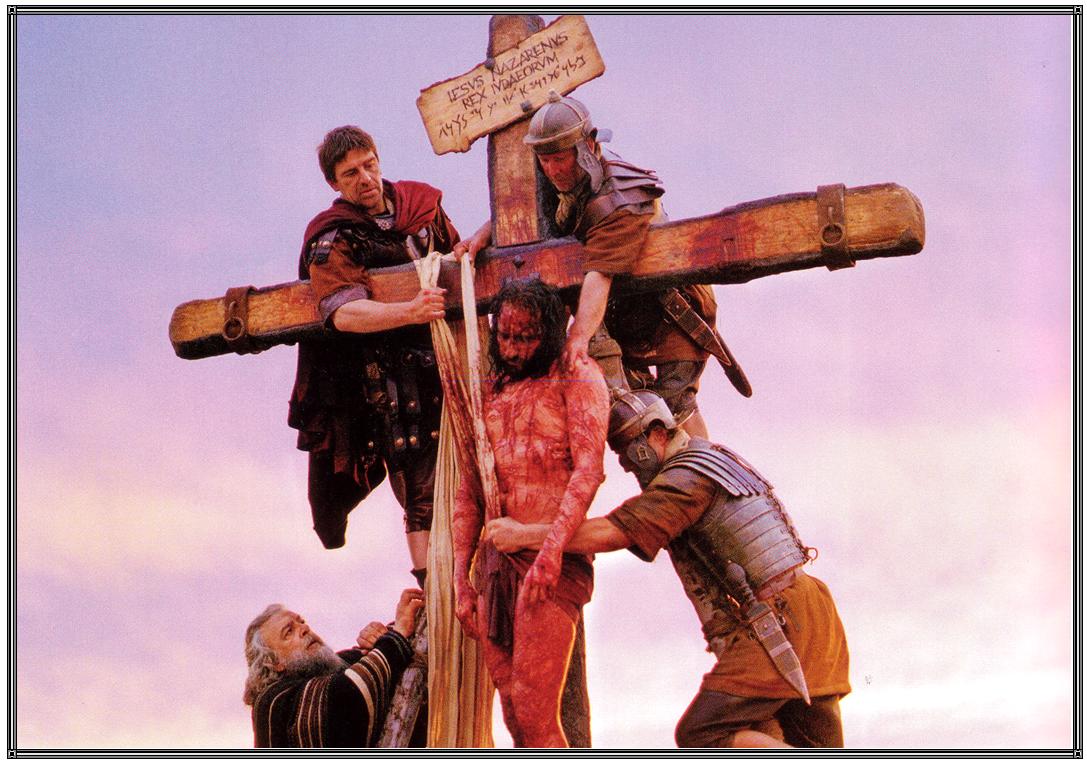
A few years ago, in 2004 to be exact, Mel Gibson directed a film called ‘The Passion of the Christ’. It re-enacted the last twelve hours of Jesus’ life. The Passion of the Christ is the highest grossing R-rated film in United States history, and the highest grossing non-English-language film of all time. It caused outrage. Some critics called it obscene. It was shown on television a few years ago and I decided to watch. I gave up watching at the scourging at the pillar. It was obscenr because it was depicting that was too horrible to watch.

Some complained that it was blaming the Jews for killing Jesus. Some complained that the extreme violence obscured the message. I don’t agree with either complaint. The film made me feel that I have caused this horror because Jesus died for my sins. The violence is part of the message. We find it difficult to deal with the violence because it reflects on us.

This year and especially during the month of November we have been looking back to the First World War. Our televisions have shown us the slaughter that both sides inflicted on each other. We have paid tribute to those who died for their country. We have solemn parades and use the poppy as a symbol of the blood let on Flanders fields. Yet we fail to look at the real horror. This was a war where new weapons were devised to kill more man more quickly.

Soldiers were killed by poison gas; flamethrowers were introduced to exterminate whole trenches of men. Machine guns provided mechanised killing. Aircraft were used to bomb civilians for the first time and battleships shelled towns on the east coast. Things only got worse from then on. Today we have weapons that can exterminate continents. We use advances in technology to bring the horrors of war to any place on the world, to any people and we can do it without leaving the office.

What is the significance of Jesus being nailed to the cross? Is Jesus showing us how we use cruelty and violence to get our own way? It was a warning to us. He showed us that it is in our human nature to be cruel. Despite the gifts of intelligence and science we have been given we can usually find a way to misuse them.

Why do I prefer the small crucifix on my rosaries to the large on that church wall in Nigeria? Well I suppose I find it hard to face up to the fact that it was my fault.


Joseph McGrath

My November Column Jesus in Nailed to the Cross

Jesus is Nailed to the cross

The eleventh station on the Way of the Cross is the subject of my November column in the Scottish Catholic Observer. It’s out today. Hurry down to your local parish for your copy this weekend. If you are too late don’t worry because the full text will appear here next week. It’s much better to get the paper, though, because there are other writers of interest there.