At Pentecost the Spirit came in tongues of fire – Why don’t they do that today?

Pentecost and Conversions

Last month I considered Pentecost and the transformation it brought about in the Apostles. It seems to me that I need to examine more closely what Pentecost did for the Apostles and how that relates to our own lives. We read of the tongues of fire that appeared over the heads of the Apostles and the roaring noise like a mighty wind. These were sure signs to the Apostles that something wonderful was occurring and that a great power was involved.

I have no such recollection of my confirmation. Did the Apostles get a stronger Holy Spirit than the one I received? That might seem to be a likely conclusion when we consider the effect it had on the Apostles. They went out into the streets to address the very people they had been hiding from. Not only did they face the Jews but they accused them of unlawfully killing Jesus and went on to proclaim the resurrection.

The striking thing in this episode was not just the new-found courage of the Apostles, but the fact that they were ‘speaking in tongues’. In the ‘Acts of The Apostles’ it says that each of the listeners heard them in his own language. It doesn’t say that the Apostles spoke different languages. When the Apostles spoke each of the hearers understood what they were saying. It is the understanding that is important and I will come back to that.

I suppose I didn’t need a tongue of fire and a mighty wind at my confirmation because I was not a hunted man, afraid for his life and unaware of the powers he had been given. Those signs at Pentecost proved to the Apostles that a greater power was at work in them and gave them the courage to proceed. When I was confirmed I was not in any danger and I had the power of the Universal Church to convince me that God is at work in the world.

It is of some concern, then, that many baptised and confirmed Catholics don’t seem to realise the power they have. They received the Holy Spirit and his gifts and seem thoroughly bored by the whole thing. The power to communicate to people of different languages is nothing to write home about in the age of the internet and Google Translate. You can write anything on your computer and have it instantly translated into almost any language for your audience. Who needs ‘speaking in tongues’?

Well, this is where I’d like to make a distinction between hearing and understanding. I had occasion to make use of Google Translate when I was in my Camino adventure a couple of years ago. I had chest pains and was consulting a doctor in A&E. The doctor spoke Spanish and I spoke English. She used the computer to translate. She typed the questions in Spanish and I was given five versions of what she said in English. I chose what I thought she asked and replied in English. The computer gave her five versions of what I might have said. I think you can see where I’m going. Before long I understood that I was not going to die but had no idea what was wrong with me.

How often have you gone to Mass and heard the readings recited as though they were a list of words to be pronounced with no regard for their meaning? Unless we are to understand what is being communicated we might as well not listen. This is at the heart of our current problem. In our Gospel we have the greatest story ever told. They even made a movie of that. In two thousand years we have managed to make that story boring.

This is the story that brought about the conversions the Apostles made of the very people who crucified Jesus. The implications of this story are such that we must re-evaluate what it means to be a human being and realise that each and every one of us is special. On that first day the Apostles converted about three thousand people. Why are we not having a similar effect on those who have drifted away from the Church?

It is easy for us to place the blame squarely on those who drift. We can console ourselves by claiming they have no sticking power. But, surely that is not the truth. If we were proclaiming the message properly, providing understanding, not just words, then I think the drift would be in the other direction. Now, don’t be alarmed. I’m not suggesting we all buy loudhailers and get out into the streets and start drowning out everything with the sound of the Gospel. It’s not the sound of the gospel we need to spread; it’s the message we have to broadcast.

I think it was as much the example of the Apostles getting out there and proclaiming the truth to a hostile crowd that won people over. By their behaviour they made people think that there must be something in this message worth listening to; just look how these men have been changed. I wonder if anyone looks at me and thinks that something powerful has changed me? If they don’t then I’m obviously not displaying the sort of behaviour in my life that would draw people to Christianity. After all, that is what Christians are for. I remember being taught in school that my task in this life is to save my soul. That is nonsense. Jesus did the saving. My job is to bring others to Jesus.

The wrong message is getting out there and it can’t all be blamed on an ill-informed press. Countless people have told me they don’t like the Church because it condemns gay people or divorced people or terrorists. To be clear, the role of the Church, that’s you and me, is not to condemn anyone; we are about bringing everyone to Christ. That was what the Apostles were doing. They were not condemning the Jews who crucified Christ; they were out in the streets bringing them back to Christ, baptising them and washing away their sins.

There are lots of ‘Christians’ out there condemning people and warning of a vengeful God. That’s not the God I know. The God I know is a loving God. He is the loving Father who watches patiently for the return of the prodigal son. Is that the God we are putting out there? Do we behave like Christ, quick to forgive and always ready to make peace or are we ready to fight? I look at my hands as I type this (I should really learn to touch type) and I’m thinking how a stranger sees my hands. Are they open, ready to shake hands or are they clenched, ready to make a fist?

We usually make a fist if we are afraid. We should take a leaf out of the Apostles’ book and throw off the fear and meet people with confidence. If we put our trust in the Holy Spirit we will always find the right thing to say to put people at their ease and show them the true face of the Church, the face of the Merciful Christ.

Joseph McGrath

Why are people bored by the Church? Do you care?

Why are so many people turning away from church? Some say it’s boring. Should priests take up juggling or magic tricks? My column is out today in the Scottish Catholic Observer. Read what I have to say. Full text will be here next week if you can’t be bothered to buy it.

Apathy is not what it used to be.

The Morning After – Full Text

This article appeared last weekend in the Scottish Catholic Observer. The full text is here for those who missed the publication.

Now Easter is behind us, Jesus is risen and all is well with the world. I imagined what that first Easter was like. The followers of Jesus can happily go about spreading the word of the good news to the world. Well, that’s perhaps what we might expect but it was far from the truth. For a start the resurrection was a bit of a mystery to the apostles. The tomb was empty and there were strange stories of angels talking to people but what did it all mean? The apostles were waiting to be arrested. They were at a loss as to what they should do next.

Even the Jewish authorities were confused. They had a report from the guards at the tomb. The tomb was empty and an angel had appeared. According to Matthew, the Jewish elders paid the guards to say that the followers of Jesus had stolen the body away in the night. The confusion of the time seems to be carried forward in the Gospels. Matthew says that Jesus came to meet the women who had first come to the tomb. In Mark’s version the women went away saying nothing because they were afraid and Jesus appeared to Mary of Magdala later. Luke does not mention Jesus appearing to any of the women. John’s account is more detailed. He says that John and Peter went into the tomb first and saw an empty tomb. Later Mary of Magdala went in and saw two angels and then Jesus appeared to her.

If we think about the trauma the apostles had come through in just a few days and probably had little sleep in that time then the confusion and uncertainty they experienced seems reasonable. In short they felt lost and had no understanding of what had just happened. Far from being ready to spread the good news, they were intent on hiding and avoiding imprisonment.

It is interesting that Jesus chose to appear to Mary of Magdala first. There is no mention of Jesus appearing to his mother Mary. I wonder if he did. If I was a betting man I would put money on it. However, he did not appear to the apostles immediately. That day, we learn, two followers were on their way home to Emmaus and met a man on the road. It was Jesus although they did not recognise him. He explained the whole story, starting with Moses and pointed out the scriptural reference to the Messiah. It was only when they took him home with them and he broke bread with them that the suddenly recognised him and he vanished from their sight.

These two disciples went straight back to Jerusalem to report to the apostles. By this time the apostles knew that Christ had definitely risen from the dead. I find this story significant because of the passage;

“they had recognised him at the breaking of bread”

Luke 24:35

There seems to be a message for us here. If we want to find Jesus them we can do so at the ‘breaking of bread’, in the Eucharist. We live in a time in the western world where attendance at mass has fallen and fewer Catholics are receiving the Eucharist. When I made my first communion we had to fast from midnight before going to communion. The opportunities for receiving communion have increased since those days because the Church recognises the importance of giving us the opportunity to meet Christ frequently.

Jesus appeared to the apostles on a number of occasions. We read of Jesus coming to the apostles in their closed room when Thomas was not there and how Thomas doubted what the others told him. Jesus later came back to show Thomas the holes in his hands and his feet. Thomas thus earned the name ‘Doubting Thomas’. That’s all we hear about Thomas in the gospels but a few years ago I was in India and visited the basilica of Saint Thomas in Chennai. The church is built over the tomb of Thomas who was killed there. The spear head that killed him is on show. So, despite having doubted, Thomas went on to spread the good news to distant people.

When Jesus visited the apostles he breathed the Holy Spirit into them and gave them their mission and the power to forgive sins. Their mission was to spread the word of the gospel to all people. That is the mission of the Church and is as vital and as valid today as it was in those early days.

The apostles were still afraid. They had received the Holy Spirit but were still confused and didn’t really understand what they were being called to do. They were just ordinary working men. They never expected to be given such responsibility. How could they possibly be expected to go out to a hostile world and convert the people? It never really struck me that they were just like me. They had been chosen by Jesus himself and had been given the power of the Spirit but did not realise what they had. I wonder if we, baptised Christians, realise the power the Spirit gives to us.

Things changed at Pentecost. We can all recall the image of the apostles, gathered in a closed room, and suddenly a noise filed the whole house and something like tongues of fire came to rest on them. What could be more dramatic? The apostles were suddenly empowered and went out and began to speak to the crowds in Jerusalem. Everyone listening heard them in their own language.

That must have seemed incredible then. Even now we can’t comprehend such a thing. I have always rationalised this. These men were special. They had been given special powers. God can’t expect such things from believers today, surely? But He does.

The apostles didn’t receive the Holy Spirit at Pentecost. They had already received the Spirit from Jesus. At Pentecost the Spirit activated them. He gave them the gifts they needed to perform the specific tasks they were set. What can that mean for us today? We received the Holy Spirit at Baptism and at Confirmation. We are expected to play our part in spreading the good news of the Gospel.

We sometimes feel that we are in a world that is hostile to our values and that it might be wiser to keep a low profile, hide our faith. The world the apostles found themselves in was far more hostile than our world today as we will see later. Will the Holy Spirit give each of us the power and strength he gave the apostles? When we look around us we see examples of people here who are willing to stand up for the values of their faith even though it might mean they will lose their job or face prosecution. In the Middle East we see people who are ready to give up their lives, facing barbaric treatment rather than deny their faith. Where do they get the strength to do that?

It seems to me that The Holy Spirit is the source of these things. When we need to stand up for our faith in what we say or in how we behave then we can call on the Spirit for all we need. There are plenty of devotional prayers to Jesus, Mary and favourite saints but the Holy Spirit is often forgotten. I think I’ll make a point of directing my prayers to the Paraclete when I find my faith waning. Perhaps if we all did then the Church would grow stronger.

Joseph McGrath

The Morning After

After the resurrection we would expect everything was fine. The disciples would be on track to convert the world.

Well it didn’t turn out that way. Things seemed pretty bleak for Christians. Does this sound familliar? How does today’s world reflect the events of the early church. See my column in the Scottish Catholic Observer this weekend.

Don’tworry if you miss it. The full text will appear here next week.

My Column – The Resurrection

The angel awaits the apostles.

The Empty Tomb

The final article in this series is published today in the Scottish Catholic Observer. What does the resurrection really mean for us? No, really mean?
Get your copy this weekend or come back here next week for the full text.
The whole series is published on Kindle here

Find this on Kindle


The Way of the Cross – Fourteenth Station

Jesus is Laid in the Tomb.

Jesus burial

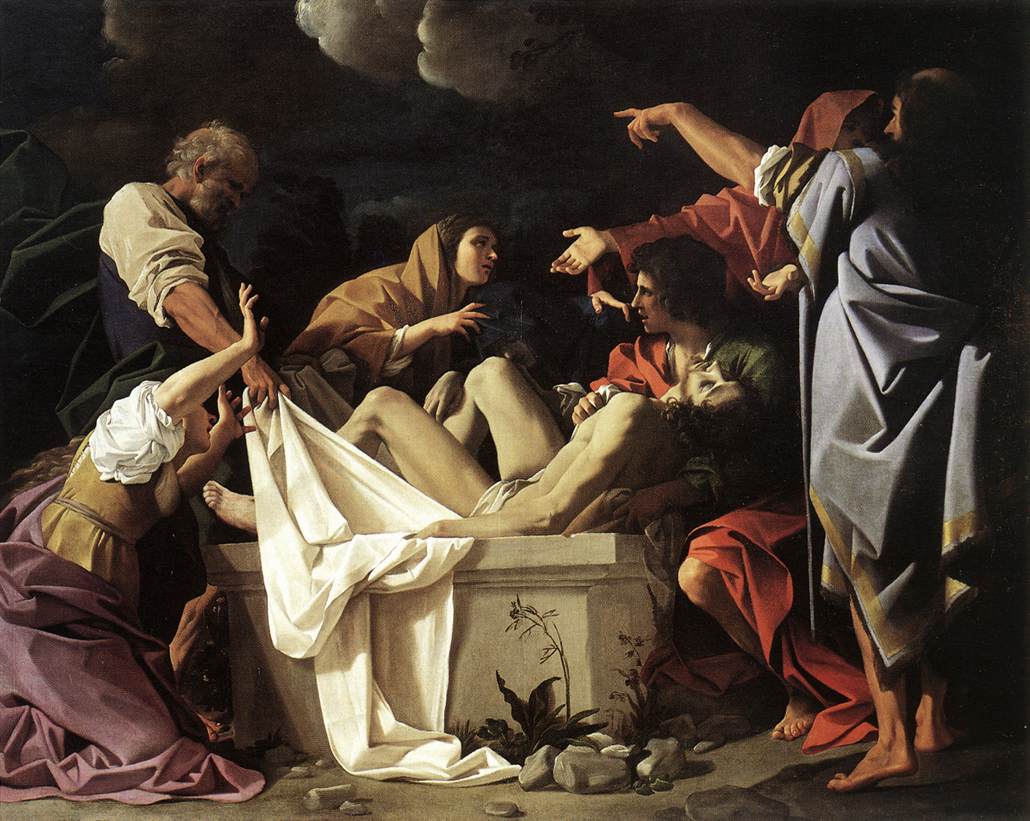
The fourteenth station on the Way of The Cross marks the end of the journey in the traditional ‘Stations’. It has become common nowadays to have a fifteenth station, The Resurrection. That’s where we will finish our journey next month. The fourteenth station is when Jesus is laid in the tomb. There is nothing surprising about that. Being laid in a tomb or grave marks the end of human life, something we all have before us.

It is the manner in which Jesus is laid in the tomb that raises questions in my mind. As we saw last month, the fact that Jesus’ body was taken down from the cross rather than being left as a warning to others was unusual. Because of the oncoming Sabbath he was hurriedly placed in the tomb, but the Jewish authorities had a stone rolled in front of the tomb and a guard detachment placed there.

I assumed this was done to thwart any attempt of his followers to remove the body and claim that he had been resurrected. However, Jesus’ foretelling of his resurrection was worded as ‘this temple’ and the people assumed he meant the Temple in Jerusalem. This was used against him at his trial. I wondered what the Jewish attitude to resurrection was.

After some research I discovered that the Jewish religion was divided on the idea of resurrection. People could believe there would be life after death or not. The Pharisees believed in resurrection but the Sadducees did not. Some believed in some forms of reincarnation. Whatever version they subscribed to, the Jews believed that any resurrection would only be in the time of the Messiah.

Perhaps some in authority might have had second thoughts about Jesus and hoped to shut him in the tomb if he did come back to life as Lazarus did. Whatever the truth of this supposition, I believe Jesus focussed minds of the Jewish people on death and what comes after.

For us this station is a reminder that we will certainly leave this world. This has been a central part of Christian belief and practice. We are welcomed into the Church at our baptism. The ceremony of baptism has been modified and changed over the centuries. John the Baptist baptised in the river. Early Christians were also baptised by immersion. Early churches had a pool for an immersive baptism. I believe there are still some examples in existence today.

The immersion in the water represented death and rising out of the water represented rebirth. We died to our old life and were reborn into a new life with Christ. At baptism we reject Satan and dedicate ourselves to Christ. I was very young at my baptism and remember none of it. Most of us experienced baptism as an infant so we missed the significance.

It is as adults that we have to look again at baptism and realise what promises were made on our behalf. We are promised to Christ and the values he taught. We are required to renounce the values of the world and materialism. That’s a difficult thing to do. How do we know what we can accept and what to reject in today’s world? It can be difficult to reject values which are normally accepted in our society. The Church’s attitude to sexual behaviour was scorned in the sixties and seventies. We were stuck in the past and needed to get up to date.

The recent scandals where cases of historical sexual abuse have hit the headlines are really a symptom of the lax attitude to sexual behaviour our society accepted. When pop stars and celebrities come to trial you won’t hear any mention of the Church’s teaching but we know it was and is right. We have to live our lives according to Gospel values whether that brings us into conflict with wider society or not.

This new life in Christ does not last forever on earth. The time comes when we too will be laid in the tomb as we pass from this life to the next. This station is a reminder of that and the fact that it will happen all too soon. I was recently at a hospital for an MIR scan. The hospital in Clydebank was a beautiful place and the doctors and staff were friendly and welcoming. Pleasant as this was it did not really prepare you for going into the scanner.

I lay in the machine as it buzzed and clanked, classical music playing through the earphones. When the scan was completed and I opened my eyes all I saw was the top of the tube I was in. It reminded me of Sean Connery waking up in a coffin in a James Bond film. Just for an instant I looked at the ‘coffin lid’ and wondered, “Is this what it will be like?”

The fourteenth station reminds us that the end could be sooner than we think. I was once asked what I would do if I was told I only had a short time to live. It is a difficult question to answer. Some people say they would visit places they had never seen. Some would spend all their money. Others, more thoughtfully, would visit friends and relations they had not seen for a long time.

I thought about it for a few minutes and decided that if I’m really living a Christian life, using my time for the coming of the Kingdom, then that’s what I should continue to do. If you are doing what God wants you to do then get on with it. On the other hand if you are not doing what you think you should do at the end of your time here then perhaps it’s time to start.

I suppose we should live every day as if it might be our last. In our fourteen stations we have seen that Jesus was welcomed by the crowds into Jerusalem and before the week was out he was executed. It made me thing about what I do with my time. If I die tomorrow will I have regrets, things I’ve left undone or will I have the satisfaction of having tried to live my life as Christ expected?

Now this is traditionally the last station on the Way of the cross, but there are modern variations which regard the fourteenth station as unfinished business. There are churches where there is a fifteenth station. The Way only finished at fourteen for those who had missed the message. It is not the end of the road.

We are now all on our Lenten road, striving for spiritual growth by our sacrifices and prayer. I’m back to giving up drink because I found it impossible to give up coffee. I hope you are all finding something uplifting in your Lenten works and feel the benefit at Easter. The last station will be in the Easter edition of the paper, time to contemplate what we have achieved on our Lenten Way of The Cross.

Joseph McGrath

Jesus is Laid in the Tomb. The 14th Station on the Way of The Cross

Jesus burial

This month sees us reach the end of the traditional way of the cross. What’s so important about being laid in a tomb? Of course we are not finished yet!

This week sees this article published in the Scottish Catholic Observer. Get your copy in your local parish. The full text will be here next week.

The Thirteenth Station Jesus is Taken Down from the Cross

Christ on the cross

What’s so strange about removing a corpse?


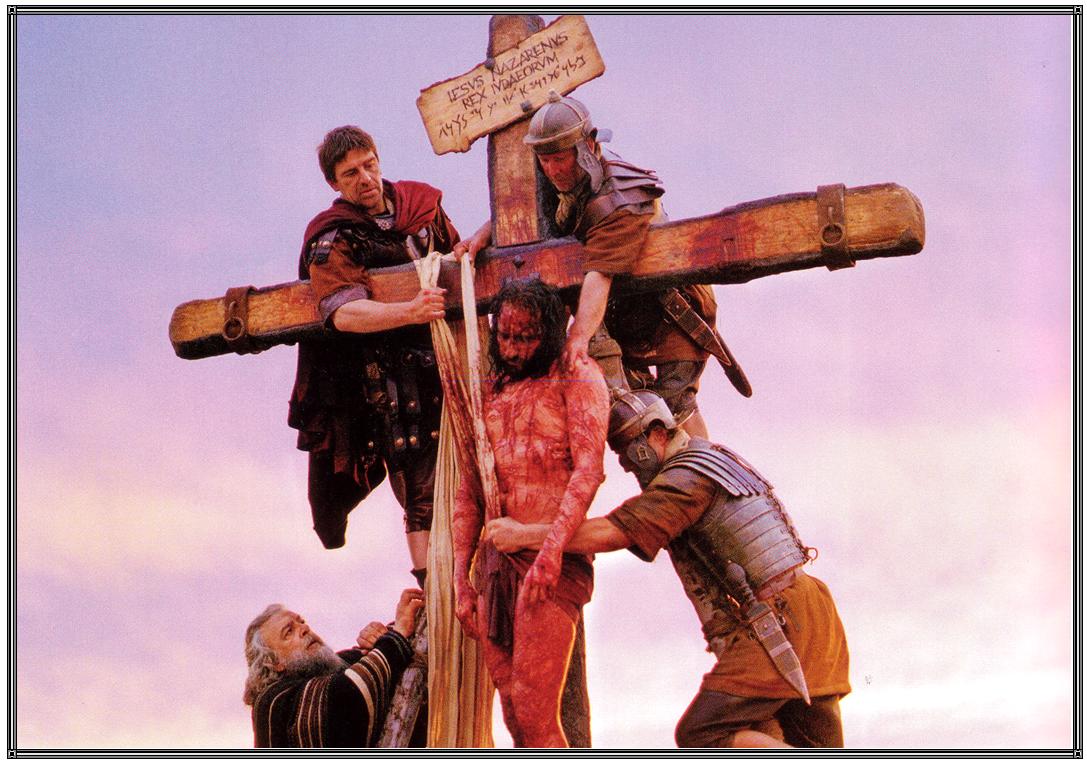
This is the station I have been worried about. What is there to say about it? Of course Jesus is taken down from the cross, that’s what we would expect, isn’t it? What more is there to say? What message can we take from this station? Well actually there might be more to this than first appears. The Romans used crucifixion, not only as an execution but as a warning to others. The bodies were usually left to hang on the cross, visible to all who travelled into the city. This would terrify anybody who was thinking about opposing the mighty Roman army. Anybody seeing the decaying corpses would think twice and probably keep their thoughts to themselves.

In this case the body of Jesus was released that very afternoon. He was not to be left hanging as a warning to others. This seems to break the tradition of Roman crucifixion. According to the Gospel of John,

After this, Joseph of Arimathaea, who was a disciple of Jesus – though a secret one because he was afraid of the Jews – asked Pilate to let him remove the body of Jesus. Pilate gave permission, so they came and took it away. Nicodemus came as well – the same one who had first come to Jesus at night time.

John 19: 38, 39


I noticed that only John mentions Nicodemus in his account. The other three evangelists say nothing about him. I’ll come back to that later. If it was the custom to leave the bodies to rot on the cross why did Pilate readily agree to Joseph’s request? Why did the Jews not object? There’s more to this than meets the eye.

What happened at the death of Jesus that seems to have caused this change of heart? Looking back we see that when Jesus died on the cross there were great signs. Matthew recounts them.

At that, the veil of the Temple was torn in two from top to bottom; the earth quaked; the rocks were split; the tombs opened and the bodies of many holy men rose from the dead.

Matthew 27: 51, 53

I think it is fair to say that people knew that something terrible had happened. The centurion is quoted as saying “In truth this was a son of God.” Even the heathens knew that this was no normal execution. I wonder how those responsible felt about their part in this when they saw those signs? Pilate of course had been warned by his wife and was reluctant to become involved. His hand washing at the pavement was his attempt to avoid any blame.

Have you ever had an instance of a child breaking an ornament and then hiding it under the sofa, pretending it had never happened? I think the authorities were behaving like that. The removal of the body, hiding it in the tomb was their denial. They were anxious to have the whole business forgotten, swept under the carpet. Of course we know now that that is not what happened. Things took an entirely different course altogether.

The apostles seem to have been in shock. This was not what they had expected. The triumphal entry into Jerusalem a few days before seemed to promise a great future for Jesus and for them. Now they were in hiding and everything seemed to have come to nothing. Peter, who had been made the head of the Church by Jesus had denied his master and was riven with guilt. The ‘Church’ was in disarray.

This is where Joseph of Arimathaea and Nicodemus come in. We met Nicodemus earlier in the gospel story. He had come to Jesus in the night. He was a prominent Jew who came to believe in Jesus. He came out of darkness into light. Joseph of Arimathaea is said to be a secret believer. He was afraid to show his belief for fear of what the Jews might do to him. In the story so far they are nobodies. They have no prominence.

Now, when it all seems to be falling apart, it is these men who step forward and take charge of the body of Jesus. It is they who place Jesus in the tomb. This would normally be something a family would see to. In a sense we are seeing a new definition of family. Joseph and Nicodemus step up and ensure that God’s plan will proceed.

The authorities would have expected the execution of Jesus to scare off any followers of Jesus and, as we see in the case of the apostles, it worked. Strangely enough it was the people who had been afraid before who now acted. We see a transformation in those who, like Joseph and Nicodemus, had been afraid but now put their fear behind them. The crucifixion had strengthened their faith rather than destroy it.

This is something I had not realised before. When the Church was in its first crisis it was not the apostles who pulled it together but just ordinary followers. That rang a bell with me. The Church in Scotland found itself in a crisis again recently when the Cardinal admitted some wrongdoing. The media appeared outside the cathedral in Edinburgh to ask the Catholics coming out of mass how their faith had been affected by the revelations. I remember two Edinburgh ladies explaining that their faith had not been shaken at all. Their faith was in God, not in any of the priests, bishops or cardinals of the Church. In the days that followed ordinary Catholics rallied and showed that the Church is still the Church started by Jesus no matter what foolishness we humans bring to it.

So the message for me in this station is in the nature of a question. What kind of follower am I? When things get difficult and the Church is held up to ridicule what is my reaction? Am I tempted to shut myself away from it all? Perhaps I’m the kind of Catholic who might like to distance myself from it all. Perhaps I’ll find myself saying that I’ve always had my doubts and now I can see how wrong we were.

On the other hand I might be the kind of Catholic who sees the Church as my home. Am I the sort of Catholic who sees the Church as something made up of people rather than an organisation that I can join while it suits me? I hope I see myself as part of the family that is the Church. I hope I’m the sort of Catholic who smiles when he listens to people who say the Church should share out all its wealth with the poor; a smile because the wealth of the Church is the faith of its people. I’ve been lucky enough to witness that treasure being shared out to the poorest people in the world by priests, nuns and many lay people. It is those who give of themselves, not those who only give some money who are sharing out the treasure of the Church.

The message in this station is easy to ignore. We can just Look up at the image of Mary holding the lifeless body of her son, recite “I love you Jesus, my love above all things.” and then move on to the next station. Perhaps, though, we might pause and ask ourselves whether we would join with Nicodemus and Joseph of Arimathaea and keep God’s plan on track. They found themselves in the most difficult of times and found their faith strengthened. Perhaps these difficult times will strengthen our faith.


Joseph McGrath

Good News – The Wait is Over!

Yes, my January column is published this weekend in the Scottish Catholic Observer. I know it is February but we had a big splash on SCIAF last weekend ( hope you read that) and some things are worth waiting for.

I hope this one was worth waiting for. What’s strange about taking a body down from the cross? If you miss this week’s edition the full text will be here next Friday.