My January Column – Where did it go?

It looks like my January column in the Scottish Catholic Observer is not in this week’s edition. That’s not a problem – I think it will be in next week. This week, however, we have a large spread on the work of The Scottish International Aid Fund (SCIAF).

SCIAF was born in my home parish of Saint Columbkille’s in Rutherglen and has made unbelievable changes to the lives of some of the poorest in the world. You really need to see this weeks paper to get a flavour of what they are doing.

Try again next week for my article.

Jesus is Taken Down From the Cross – Nothing Strange There?

Christ on the cross

What’s so strange about removing a corpse?

I was worried that there was nothing much to say about a body being removed from the cross. How wrong I was. Extraordinary when you think about it.

Read my musings on the thirteenth station on the Way of the Cross in this week’s Scottish Catholic Observer. It’s out today and you can pick it up at your local parish.

The full text will be available here next week, but the paper has so much more.

My December Column – Jesus Dies on the Cross – Full Text

The crucifixion

Jesus Dies on the cross

The Way of the Cross 12 Jesus Dies on the Cross.

On the way of the cross we have been following the progress and suffering of Jesus as he made his way through Jerusalem to Calvary. We have been looking at each situation to discover what messages are contained there for us.

In this station we come to the death of Jesus. It is a scene of loss and sadness. It is also one of relief that his suffering has come to an end. His suffering has put our own pain into perspective. Is that what this station is about, relief that it is all over?

After all his suffering it comes as no surprise to us that Jesus dies. It did come as a surprise to Pontius Pilate. As we will see later, he thought the death would have come much later. It is worth looking at how the cross kills. Death on the cross was a slow process. The victim is suspended by his arms with his legs helping to support his weight. The effect of this was to restrict his breathing and as he tired more pressure on his breathing would eventually kill him. This was a slow tortuous process intended to inflict a great deal of suffering.

The crowd has gathered to watch the spectacle. Many laugh and jeer. We might find this hard to understand but it is worth remembering that public executions in this country only ended in the UK with the execution of Michael Barrett on the 26th of May 1868 outside Newgate prison. In the case of Jesus the crowd did not understand who he really was. When he cried out he was offered vinegar to drink, probably vinegar and water as a way of hydrating him and keeping him alive to extend the suffering.

How did Jesus behave in his suffering? He continued to teach us how to live. There were two thieves crucified beside him. To the thief who confessed his guilt and asked to be remembered he promised paradise. Before giving up his spirit he asked the Father to forgive his tormentors. There is a powerful message for us there. How easy is it to forgive those who we think have slighted us or hurt us? Yet here is Jesus forgiving not only criminals but the very people who have tortured and put him to death.

Pilate orders the victims’ legs to be broken to hasten their death as it was almost Passover. Breaking the legs of the victims meant they could not support their weight and the whole weight would act to restrict their breathing. The soldiers reported that Jesus had already died, much to the surprise of Pilate. Jesus was not to be ruled by death he was about to conquer death. At his death Jesus has now left his human condition, his work done. What was his final message to us?

Jesus had already taught his followers that the commandments could be summarised in two simple commandments.


But when the Pharisees heard that he had silenced the Sadducees they got together and to disconcert him, one of them put a question, ‘Master, which is the greatest commandment of the Law?’ Jesus said, ‘You must love the Lord your God with all your heart, with all your soul, and with all your mind. This is the greatest and the first commandment. The second resembles it: You must love your neighbour as yourself. On these two commandments hang the whole Law, and the Prophets also.’

Matthew 34: 34, 40


Now in his crucifixion Jesus is revising that teaching. He goes much further. Jesus dies on the cross to save each of us. In doing so he demonstrates a love for us which is greater than love for himself. I think this is the most significant message Jesus gives us in his last act. The message is clear; Jesus’ sacrifice was to complete the Father’s plan for us. He demonstrated his love for the Father and his love for us. If we are to take up our cross as Jesus instructs us then we must love God and love our neighbour more than we love ourselves.

Then Jesus said to his disciples, ‘If anyone wants to be a follower of mine, let him renounce himself and take up his cross and follow me. For anyone who wants to save his life will lose it; but anyone who loses his life for my sake will find it.’

Matthew 26: 24, 25


Does this mean we must all be martyrs if we are to be true Christians? That is too simplistic. It really means that our neighbour’s needs are not to be put aside until we have completely satisfied all our own needs. We can’t put off helping the hungry until we have had our lavish Christmas dinner. We might have to put off buying those nice shoes we saw in the shop window and spend the money on helping the victims of Ebola virus.

We can find lots of examples of people who put the needs of others before themselves. The medical staff who travelled to West Africa to treat Ebola victims, risking their own lives, come to mind immediately. Think of others whose lives are put at risk for the wellbeing of others. I recall watching a fire engine racing towards a block of flats and thinking, what kind of person will run into a burning building when everyone is running out? These are special people indeed.

We have example of priests and religious who give up a normal family life in the service of the rest of us. What does that mean for us? In marriage we must live not only with each other but for each other. Our lives are put at the service of our spouse and our children. Jesus dies on the cross. Our cross is to live for others, not too much to ask in comparison.

Now you might be thinking that this article is a bit serious for a Christmas edition of the paper. Surely we should be thinking of happier things at Christmas? Well, I think it is a fitting topic and I’ll tell you why.

At Christmas we are celebrating the birth of Jesus. A child’s birth is always a cause for great celebration. But, this birth is different. Jesus brings joy, not only to the family and those around but he brings joy for all mankind. This birth is more important than any other because it is the beginning of the process of our redemption. Jesus has come, not only to let mankind experience the presence of God among us but to teach us how to live with each other and to open Heaven for us.

The Nativity and the crucifixion are the beginning and end of Jesus’ time on earth. Without the Nativity there could be no salvation and without Calvary the Nativity would be insignificant. While we are enjoying our Christmas celebrations and visiting the child in the manger let us remember that this child came to change the world. His coming is a threat to many and a promise of salvation for all. He presents us with a choice; indulge yourself in the pleasures of this world or join with me in changing the world for ever.

It is tempting to just sing the carols, send the cards and wish each other ‘Happy Christmas’. It is surely a time for great joy and celebration. We will all be giving and receiving gifts but are we prepared to go further and take up Christ’s challenge and give up our lives?

Happy Christmas

Joseph McGrath

Jesus is Nailed to the Cross – Full Text

A crucifix

The large crucifix in Nigeria

The 11th Station Jesus is nailed to the cross


In this series of articles I’m taking the Way of the Cross and pondering on what each station is saying to us. I must stress that these are personal thoughts and if they seem a bit strange then that’s about me rather than the Church. The eleventh station recalls that Jesus was nailed to the cross. We are all familiar with this.

I grew up in a house with a crucifix on the wall. My rosaries have a small crucifix on the end. Jesus nailed to a cross has been the wallpaper of my life. Every church I visit has at least one crucifix. Some are small and some are large they are all works of art. I expect to see a crucifix on a church, a classroom wall, in a home. It is just a familiar item.

A few years ago I read an article by a woman who had gone into a church and was shocked by the sight of a man nailed to a cross – a crucifix. What sort of people are these who have horrible things like that in their churches? I was shocked at her reaction. Had she never seen a crucifix? Where was she coming from?

In my Missio life I was on a visit to Nigeria and stayed for a few days in a parish in Lafia. I wandered into the church where the ladies were preparing for the harvest festival mass. The crucifix on the wall behind the altar (see the picture) was the biggest I have ever seen. It dwarfed everything and everyone. I literally fell on my knees. Now it was my turn to be shocked. I’m not sure why, perhaps it was the sheer size of the crucifix, but the thought in my head was, “What have I done?”

Now I’m sure you learned the same thing as I did at school; Jesus died on the cross for my sins. That is disturbing but this giant crucifix brought home to me the enormity of what happened. No other crucifix I have seen has had this effect on me. How do I deal with this? As usual I’ve pushed it to the back of my mind to pretend it is not there; but it is there and will not go away.

Peter Howson is an artist I have admired for some time. He paints picture that do not flatter but point the finger. He completed his “Saint John Ogilvie” for the refurbished cathedral on Clyde street and there was an exhibition of some of his preparatory sketches and paintings in the adjacent offices. I went along, eager to see how he had come to his final work.

The whole exhibition was very moving. One sketch in particular caught me. It was the face of Christ, crowned with thorns and terrified! This was not the quiet suffering face of Christ I had seen in many works of art. This was the face of a man about to go through an extremely brutal experience. He was about to be nailed to the cross. This image made me stop in my tracks. It was the first picture I have seen that conveyed the true horror of what Jesus underwent; and he did it for me.

Suffering is not something we are unaware of. If you are clumsy like me then you you suffer lots of minor accidents. Have you ever hit your finger with a hammer? I’m not trying to promote this as a hobby. It is very painful and produces all sorts of words your children should never hear. I have done this many times; take it from me, it is not to be recommended. It is even worse to puncture yourself. Getting a cut in the kitchen or even pricking yourself with a needle cause pain but it passes and soon heals.

Have you ever stapled your finger? That’s altogether different. It hurts on the way in and it is really painful on the way out. That’s because, unlike the needle or the kitchen knife, the edge of the staple is ragged. When they nailed Jesus to the cross they didn’t have the smooth, regular, machine made nails we are familiar with. In those days nails were made by hand by a blacksmith wielding a hammer. The nails were bashed out of bars of iron. There was nothing delicate about these rough-hewn pegs.

Jesus was held down and the nails were bashed through him into the wood. Most of the old paintings show the nails piercing his hands but more recent commentators have decided that it is more likely that the nails pierced his wrists. I don’t know if it makes a difference which one it was. In both cases the nails must have shattered bone and muscle. It is really too horrible to contemplate.

A few years ago, in 2004 to be exact, Mel Gibson directed a film called ‘The Passion of the Christ’. It re-enacted the last twelve hours of Jesus’ life. The Passion of the Christ is the highest grossing R-rated film in United States history, and the highest grossing non-English-language film of all time. It caused outrage. Some critics called it obscene. It was shown on television a few years ago and I decided to watch. I gave up watching at the scourging at the pillar. It was obscenr because it was depicting that was too horrible to watch.

Some complained that it was blaming the Jews for killing Jesus. Some complained that the extreme violence obscured the message. I don’t agree with either complaint. The film made me feel that I have caused this horror because Jesus died for my sins. The violence is part of the message. We find it difficult to deal with the violence because it reflects on us.

This year and especially during the month of November we have been looking back to the First World War. Our televisions have shown us the slaughter that both sides inflicted on each other. We have paid tribute to those who died for their country. We have solemn parades and use the poppy as a symbol of the blood let on Flanders fields. Yet we fail to look at the real horror. This was a war where new weapons were devised to kill more man more quickly.

Soldiers were killed by poison gas; flamethrowers were introduced to exterminate whole trenches of men. Machine guns provided mechanised killing. Aircraft were used to bomb civilians for the first time and battleships shelled towns on the east coast. Things only got worse from then on. Today we have weapons that can exterminate continents. We use advances in technology to bring the horrors of war to any place on the world, to any people and we can do it without leaving the office.

What is the significance of Jesus being nailed to the cross? Is Jesus showing us how we use cruelty and violence to get our own way? It was a warning to us. He showed us that it is in our human nature to be cruel. Despite the gifts of intelligence and science we have been given we can usually find a way to misuse them.

Why do I prefer the small crucifix on my rosaries to the large on that church wall in Nigeria? Well I suppose I find it hard to face up to the fact that it was my fault.


Joseph McGrath

My November Column Jesus in Nailed to the Cross

Jesus is Nailed to the cross

The eleventh station on the Way of the Cross is the subject of my November column in the Scottish Catholic Observer. It’s out today. Hurry down to your local parish for your copy this weekend. If you are too late don’t worry because the full text will appear here next week. It’s much better to get the paper, though, because there are other writers of interest there.

My September column: The Ninth Station

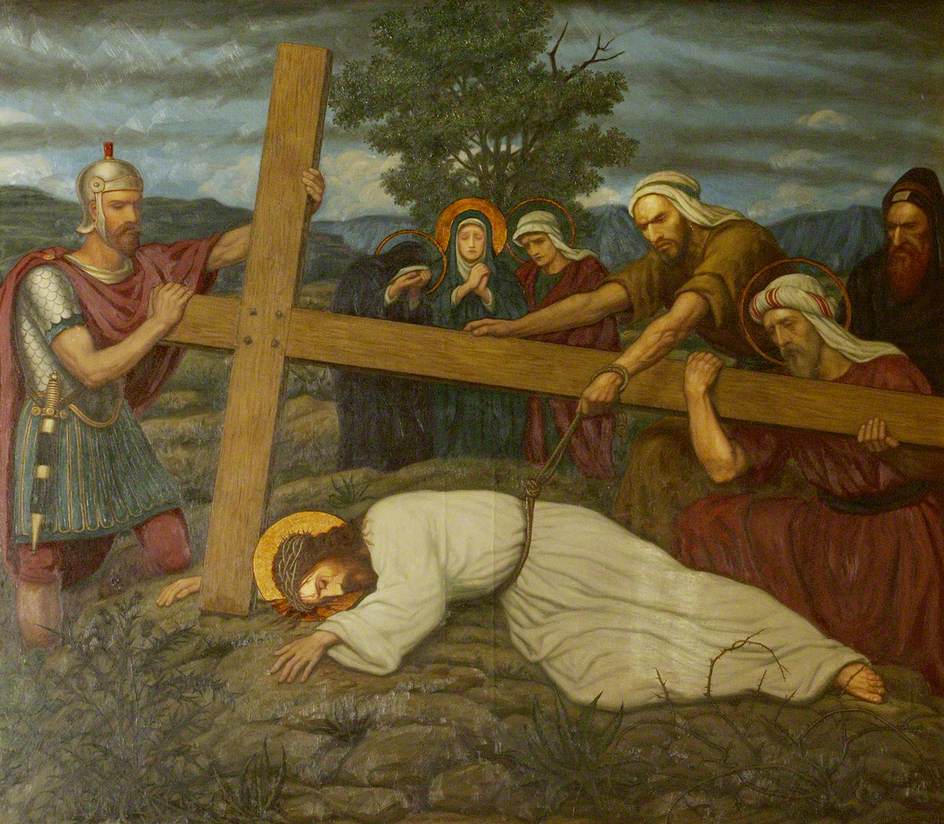
The ninth Station on the Way of the Cross;- Jesus Falls the Third Time.

The Third Fall

The Third Fall

Why is this significant? Why did he fall only three times? Why did he get up again?

For my thoughts on this mystery get your copy of the Scottish Catholic Observer this weekend. It’s out today. My column should be there.

If you are away on business or holiday or still have your head tucked under the blankets duvet afraid to find out the result of the referendum then the full text will appear here next week. The paper is better though with so many other interesting writers. (Should I have left out ‘other’?).

The Way of the Cross -8 My August Column

The weeping women

Weep not for me

Jesus meets the women of Jerusalem

In this series of articles I’m looking at the way of the Cross and I’m trying to find the meaning behind it; the message for us. This is a curious incident on that final journey. Who were these women/ Why were they weeping and why does Jesus speak to them in the way he does? It’s very strange and it needs looking into.

I looked into the gospel accounts to see what I could find there. The only mention of this comes in Luke’s gospel.

Large numbers of people followed him, and of women too, who mourned and lamented for him. But Jesus turned to them and said, ’Daughters of Jerusalem, do not weep for me; weep rather for yourselves and for your children. For the days will surely come when people will say, “Happy are those who are barren, the wombs that have never borne, the breasts that have never suckled!” Then they will begin to say to the mountains, “Fall on us!”; to the hills, “Cover us!” For if men use the green wood like this, what will happen when it is dry?’

Luke 23: 27, 31

The other three evangelists do not mention this incident. Why has Luke picked this out? He must have recognised an important message in this passage. The women in the passage are not the women who followed Jesus from Galilee. They are women of Jerusalem. If they are not followers why are they weeping and why does Jesus seem to discount their sorrow?

The question is one of ritual. Death has many rituals in different societies. In Jewish tradition women would be hired to come and weep and wail at funerals to set the sad, sombre tone of the occasion. This harks back to the story of Rachel whose tears prompted God’s forgiveness. Rituals like this are not uncommon in many societies. In Africa there are many tribes where wailing women are a matter of course.

I recall a story from my friend Father Pat McGuire who was on his first mission station in Ghana when he had to officiate at a funeral. The dead man’s widow jumped into the grave to be with her husband and could not be persuaded to come out. At a loss, Father Pat turned to a local priest for advice. He was told to start filling in the grave. When the first spade of earth was put in the woman jumped out. She was following a local ritual.

This may seem strange to us but we do similar things. Do you remember the film Oliver? Oliver was sold to an undertaker and dressed in black with a top hat, a mummer to precede the hearse and set a sad tone. We are still bound by funeral rituals today. We wear black. We have solemn faces, bells toll a solemn message of sadness. Yet, as Christians, we believe that death is the start of our new life in heaven; surely a happy occasion?

Rituals around death are changing in our society as we reject religion and need something in its place. I remember watching the funeral of Princess Diana and being amazed when people began throwing roses on to the hearse. Laying bunches of flowers, teddy bears or football tops on railings or at the roadside has become a ritual to mark the death of a loved one or even someone we barely knew. People are searching for something to replace a religious ritual. Perhaps the religious ritual really held no great meaning for them in the first place.

I am writing this while we are celebrating (?) the start of the First World War, the Great War as the media are calling it again. We have solemn ceremonies of rembrance of those who dies one hundred years ago. There seems to be little remembrance of those politicians who failed to avert a war in the first place. History shows little evidence of lessons learnt from the slaughter as we have managed to keep fighting wars where there need be none.

Is this false ritual what Jesus was referring to when he told the women not to weep for him? The ritual can hide the truth. Jesus’ words refer the women to another part of the Torah, our old testament, where in Jeremiah it says,

You there! Call the mourning women! Let them come! Send for those who are best at it! let them come! Let them lose no time in raising the lament for us! Let our eyes rain tears, our eyelids run with weeping! Yes, the wail is to be heard from Zion, what ruin is ours, what utter shame!

Jeremiah 9:16,19


This is in the face of the punishment that God is to wreak on the Israelites for forsaking the law.The passage about calling on the mountains to fall on us is a reference to another scriptural passage. This one is from Hosea 10:8 warning the Israelites of the punishment God will mete out for their unfaithfulness. Perhaps Jesus is warning the Jews of what is to befall them after rejecting him as the Messiah.

Jesus is the green wood in the quote. He brought the completion of the covenant between God and man a new covenant. The Jews rejected him and stuck with the dry wood, the incomplete covenant. This would not be immediately obvious to the people. After the crucifixion the Jewish religion continued and does to this day. Christianity started small and grew slowly.

The message in Luke’s gospel is really one for us. He is warning us about adopting rituals which, though not bad in themselves, can hide the real message. What do I mean by that? Let’s look at ritual in our Christian lives. Going to mass on a Sunday is a good place to start.

When I was a boy (not really that long ago, surely) we were taught that the obligation was to assist at the sacrifice of the mass. That is a wee bit more than just being there. At the consecration we are witnessing something extraordinary. The bread and wine becomes the second person of the Trinity. Lights don’t flash. There is no booming voice from heaven. Never the less we come into the presence of Jesus, our saviour. This is impossible for us to understand fully. It requires our belief. How do we react to this?

Reactions vary. Some people talk through this part of the mass. Some read the parish bulletin. Some kneel and appear devout but might be thinking about something else. Some are praying in the presence of the Lord. I’m not making any judgements here. I’m just admitting that the ritual sometimes does not highlight the importance of the moment but can fool us (me included) into thinking we have got it right. If we are not offering ourselves with the bread and wine, if we are not joining in the sacrifice at the consecration then we are missing the point.

The rituals are good. They are the signposts that can keep us on the right track, alert us to something important. When we forget to recognise what the ritual is alerting us to then we have lost the plot. We are like the weeping women. The Pharisees were hot on ritual and you know what Jesus thought of them.

This is not about ‘going to communion’ and then carrying on with things as normal. This is our opportunity to accept Jesus into our lives and give that life to him in our sacrifice. We should be going out of church on a mission. We should be out to change the world, starting small, growing slowly. Changing ourselves and becoming an influence on others by our example.

In this station I have learned something Luke wanted to tell us about ritual. We must be able to recognise Jesus there and be alert to his presence in our lives.


Joseph McGrath
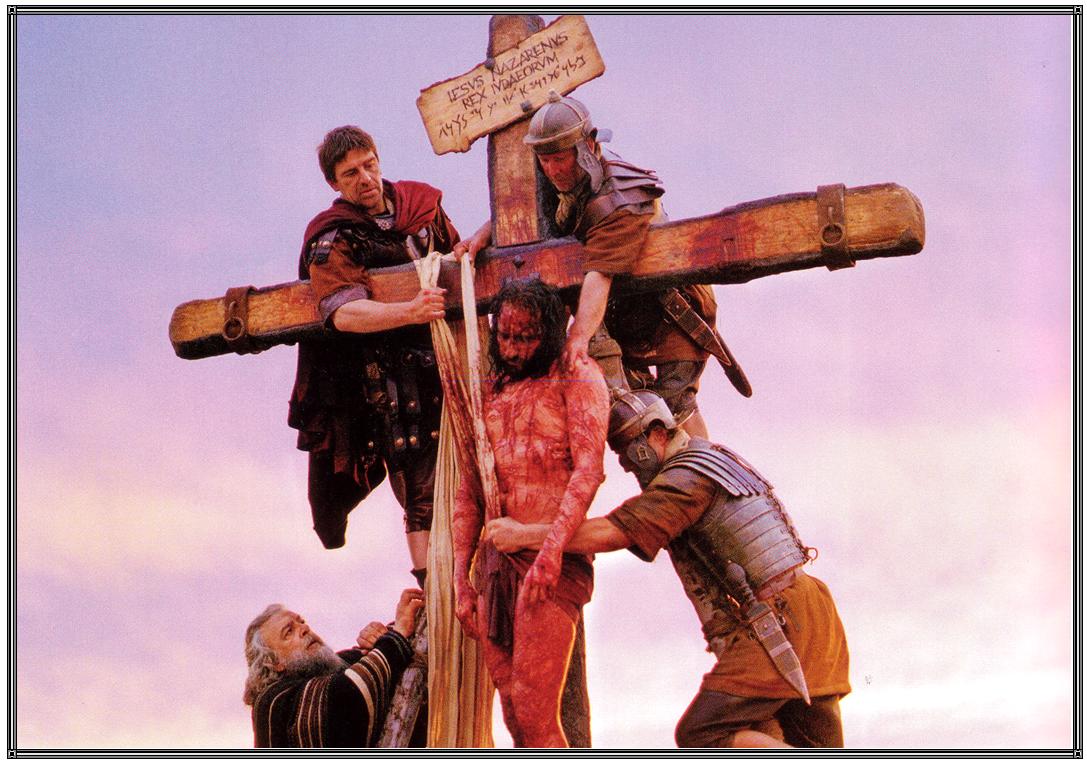
My August Column – Jesus Meets the Women of Jerusalem

The weeping women

Weep not for me

My August column is published today in the Scottish Catholic Observer.

The eighth station – Jesus meets the women of Jerusalem. Who were these women and what were they really weeping about? Why do they get a mention today after almost two thousand years?

Is there a message here for any of us? Get the paper this weekend and see for yourself.

Don’t worry if you miss it. The full text will be available here next Friday (5th September). There is a lot more in the paper though.

Joseph

Kevin McKenna and a Moral Duty

Reading this weekend’s Scottish Catholic Observer I was interested to see Kevin’s column dealing with the upcoming referendum. Kevin states that we have a moral duty to vote. This is a sentiment I wholeheartedly agree with. Kevin deftly points out the immorality of the policies pursued by our Tory and Lib Dem coalition and their attacks on the poor. There are moral issues here and we should take note.

Kevin’s point, however, seems to focus on how a vote for independence would free Scotland from immoral policies. He fails to show good examples of policies the Scottish Government has espoused which highlight morality. The same sex marriage bill seems to put great restraints on people of a christian outlook voicing their views and keeping their job in certain areas. It is an interesting thesis that leaving 90% of the population of the KU, the country we inhabit, to the mercies of the Tories is a moral act. Running away and making no attempt to change things does not seem like a moral stance to me.

For some reason Kevin seems to think that Scots are more moral than the English and Welsh. I must say that has not been my experience. Kevin is right to say that we have a moral duty to vote. He is right to suggest that we have a moral duty to work for a fair society. Picking up the ba and walking away does not fit the bill. Kevin is the very man to campaign against the greedy society, the immoral bankers (RBS anyone?) and politicians who rob the poor and help the rich.

Come on Kevin, you know you can do better than this!

You can read Kevin in the Scottish Catholic Observer. See what you think. Where does the moral path lead us?

Joseph


The Seventh Station – Jesus Falls the Second Time

Jesus

Jesus Falls the Second Time

Jesus Falls the Second Time


This month I’m looking into the seventh station on the Way of the Cross. Jesus falls for the second time. The second fall should not be unexpected. Jesus was getting weaker with loss of blood. Yet a second fall brings with it the warning that this will continue. I wrote earlier about tripping on a kerbstone in Paris and the shock of the fall. The problem is when tripping becomes normal.


Last year I found myself suffering with sciatica. I thought it would go away by itself but it got worse. What can you do? I went to the doctor and he sent me for physiotherapy. I thought that was helping but found I was stumbling when I walk. It now appears I have a worn hip so I just keep taking the tablets. When I walk I sometimes find my foot doesn’t go where I meant it to go. Tripping and the consequent fall has become a feature of life now.


Jesus’ second fall is a metaphor for sin. Just like my occasional fall, falling into sin becomes a feature of life. We can think of a fall from grace or a fall into sin. Falling into sin makes sin sound like a trap and so it is. I don’t know about you but I can excuse myself by thinking that a sin is not serious or is not harming anyone. That’s the trap. Just like my problem with tripping falling into sin is a normal part of life. We need to be aware and ready for the unexpected.


Now, in sin, I’ve changed my perspective. I’m seeing things slightly differently. When my perspective is distorted my decisions get distorted too. I’ll give you an example. I’m six foot two and I can reach for things on high shelves but often get into bother because if you measure me I’m only five foot eight. I have a similar problem with cameras that don’t capture my full head of hair. I think you get the picture.


If my view of reality is distorted then my relationship with others will be too. My sin distorts my view of the world unless I realise that I am wrong and do something about it. To return to the analogy of the fall, you can’t get up unless you know you are down.


This was brought home to me recently when I read on Twitter about a woman in America who threw her children out of the window. That was disturbing, shocking. What was more disturbing were the comments added by other readers. They posted all sorts of suggestions about the sorts of torture that the woman should suffer.


The comments were based on the view that this woman is evil. Nobody suggested that she might be suffering from some psychological disorder and be in urgent need of help. Was this based upon the perception that we are good and guiltless and the woman must be evil? If so then we are in the trap of sin. None of us are without sin. Once we realise that we can look with compassion on others.


Another example I found in the news was the funeral of Fr. Kenneth Walker who was murdered trying to defend his fellow priest in Phoenix, Arizona. A group of protesters from Westboro Baptist church demonstrated with placards at the church. They are an unaffiliated church and have been demonstrating at the funerals of service personnel who died in Afghanistan. They claim that these things are God’s punishment.


I suppose that’s an old idea of God. It’s a picture of a vengeful God who is watching out for us to fall into sin and take revenge on us. Nothing could be further from the truth. Jesus came to save us, not condemn us. The sufferings and falls we contemplate in the Way of The Cross are how Jesus took the punishment for our sins. God is always ready to forgive. We just need to turn back to Him.


How often have you heard people talk about Catholic guilt? The story goes that we are brought up in an atmosphere of sin and guilt. This causes all sorts of psychological problems that are only solved when you give up religion. Of course it’s all nonsense. Being aware of sin and the effects of sin on our lives gives us the opportunity to change and improve life. As Catholics we have the sacraments to help us be reconciled with Jesus and rid ourselves of any burden we feel.


If we are forgiven, free of sin, then we are in a position to treat others in the same way. We should be able to “forgive those who trespass against us”. How much evil in the world is committed because of perceived wrongs others have done to us? There are wars in Africa and the Middle East caused by real and imagined wrongs. How much better the world could be if we were more ready to forgive.


We can look to South Africa for a great example of this. The black people in that country had faced oppression under the Apartheid regime for decades. Families had suffered great injustice and brutality. When the regime fell there could have been terrible bloodletting as people took revenge. Instead there was a system of Truth and Reconciliation. People could own up to what they had done and were forgiven. The bloodbath was avoided.


So how do we get out of the trap? It’s not easy. You know the story about the man who took a shortcut on his way home from the pub. He cut through the cemetery and fell into a grave dug for a funeral next morning. Try as he might he could not get out so he sat down to wait for morning. Soon another reveller fell into the same grave and tried to climb out. The first man tapped him on the shoulder and said “You’ll never get out.”. But he did with one jump.


Who can give us the tap on the shoulder? Who can help us out of the trap? Obviously Jesus is the one to turn to. In Jesus we can find the compassion we need to help us. We can find him in the sacrament of reconciliation. Some of us find that very difficult. We can’t shrug off the feeling of guilt and can’t bring ourselves to take that step into the confessional. In this second fall we see Jesus, in his agony, get up and take an even more difficult step. He encourages us to do the same.


I had a friend who had been away from the Church for years. After attending the funerals of two lifelong friends in succession he decided it was time to set things to rights. He told me he went to confession, ready for a hard time from the priest. He was surprised to find that rather than a hard time he was welcomed back and his sins forgiven. There was a visible change in him. He was a happier man in his dealings with everyone.


When we see Jesus get up from his second fall in the seventh station we should be reminded that no fall is too great for his compassion. No matter how far we fall or think we have fallen Jesus is there to help us up again. So let’s forget about guilt and concentrate on forgiveness. Jesus is ready to forgive us and we must be ready to forgive one another.


Joseph McGrath