Fear Is The Key – A Cunning Plan

In 1961 Alastair Maclean wrote his novel ‘Fear is the Key’ set in the Caribbean. It was a great read, like all Maclean’s early works. I was an avid reader of his stories. He had been an English teacher in the school across the road from our house. I felt he was someone worth listening to.

His message has been listened to again, after all these years, and by David Cameron of all people. Fear has become the key strategy of the Tories in this election and it could well be a winner. Like all the best strategies it is both simple and cunning. Churchill once said of the secret services that truth must be guarded by a bodyguard of lies. Strangely enough the lies must be protected by a bodyguard of truth. Confused? That’s the whole idea!

The polls show that Labour and Tories are neck and neck. That’s remarkable considering the damage that Osbourne’s policies have done to the UK economy. Neither party has the promise of an outright victory. How can the government survive? A good general knows how to use the forces he has to concentrate fire on the enemy’s weakest point. He knows that if he can force his enemy to split his forces then he will win.

The Tories have chosen a diversion plan. Cameron talks of the danger posed by the SNP. They pose the greatest threat since the abdication, apparently. Even John Major has been rolled out and dusted down to proclaim the message. But what threat do the SNP pose to the Tories? The SNP are only contesting seats in Scotland and the Tories only have one to lose in Scotland; why the panic?

Panic is what it is about. Convincing the Scottish electorate that he is afraid of the SNP might drive many Scottish voters to turn to the Nats to hit the Tories hard. This can only hit Labour seats and reduce the Labour strength in the UK Parliament.

The same message plays differently in England. By highlighting the possibility of the SNP forcing a Labour government to go way left of their current position and forcing Scottish claims ahead of the needs of English voters he hopes to gain seats in England at the expense of Labour (the SNP don’t have any seats in England).

He hopes to force Labour to attack the SNP position to defend their seats in Scotland, drawing fire away from Tory policies. The question is, will it work? There seems to be evidence that voters are turning from Labour to the SNP. If they manage to take a large number of seats from Labour then the Tories will surely end up as the largest party. What happens then? As we saw last time, a minority Tory party was able to cobble together a coalition which enabled them to take power and wreck the economy. The poorest have suffered most while the richest few seem to have doubled their wealth.

Could this happen again? I think so. When we have an undecided result then all bets are off. Those who say they will not support the Tories can claim that it is in the interests of the country that we have a government that can have a majority in the house. The Tories will be back and in the words of Adolph Hitler when asked to come out of hiding in Argentina to take over Germany in the seventies, “This time there will be no more Mister Nice Guy!”

The Morning After

After the resurrection we would expect everything was fine. The disciples would be on track to convert the world.

Well it didn’t turn out that way. Things seemed pretty bleak for Christians. Does this sound familliar? How does today’s world reflect the events of the early church. See my column in the Scottish Catholic Observer this weekend.

Don’tworry if you miss it. The full text will appear here next week.

My Lovely Brother RIP

Jim on his graduation day

Jim on his graduation day

Yesterday the sun shone, it was Easter Saturday and I played with my twin grandsons in my daughter’s garden. All was well with the world. When night fell the telephone rang and I heard the news that my brother Jim had been found dead at home.

It’s raining today the randrops are running down the window like the tears I cannot shed for my lovely brother. he was a handsome, clever, straight (some might say blunt) person who always told it as it was. He could be hard to reach, his defence mechanism.

A proud father, hard worker and great brother. We all loved him and can’t begin to know how we will miss him.

Rest in peace now Jim.

My Column – The Resurrection – full text

My final column in the series was published last Frifay in the Scottish Catholic Observer. If you missed it the full text is here.

This is the end of the story of the way of the cross. It is not on the traditional service in most churches but is increasingly recognised. We miss the essential message of the Way if we skip the Resurrection.

Just what happened on that first Easter Sunday? I decided to read again the gospel accounts. They are not all the same. Matthew tells us of Mary Magdalene and other women going to the tomb to complete the preparation of the body. He tells us of an earthquake as the stone is rolled away by an angel. The angel sat on the stone. The guards were so frightened they were like dead men.
The angel tells the women that Jesus has risen from the dead and has gone. Mark, Luke and John tell us the stone had already been rolled away when the women arrived and the number of angels varies between one and two. Should these differences cause us to doubt the story? Modern experience of witness testimony of crimes and road accidents shows that accounts can vary when something dramatic happens. If the story was being invented the accounts would surely be identical. I think we see four different memories of what happened on that day; Jesus rose from the dead.

The first thing that strikes me is the account is the angels. We don’t talk much about angels nowadays. They are unfashionable. We are a bit embarrassed at any mention of angels. Yet, here, at the crucial event of Christianity, the angel is the major player. I must confess that angels have not played much of a role in my adult life. That was true until one day in Nigeria when I was being driven to a small school by a local priest. He drove on the right as is the law in Nigeria, unless he felt that the left hand side was a better surface. In fact he just moved from side to side for no apparent reason. As you can imagine we had a few rear misses. That was when I rediscovered my Guardian Angel. His work was cut out that day but I survived.

Angels are a manifestation of Divine intervention in normal life. This intervention is difficult to accept for those of us who have a scientific outlook; specifically an ill-informed scientific outlook. Quantum physics would have us believe that things can exist in two places at once. Science tells us to look beyond what we can see. Real scientists recognise the limits of our understanding. I suppose if we can believe in quarks we can believe in angels.

Our Christian belief is founded on the Resurrection. It is the proof of the supernatural aspect of our existence. We can believe that our earthly life is only a tiny part of our true being. We are destined to have an eternal existence. My understanding of what Heaven is like is unclear and can only be described as sketchy. At the end of a hard week I can collapse into a chair and wonder how long I can keep this up? How would I manage to keep going for eternity? It’s a scary thought.

Of course the heavenly existence we are promised will be very different from our limited life on earth. We will hopefully he resurrected without our imperfections. I wonder how I would be recognised without my imperfections. There might not be much left if they are all removed. The nature of the afterlife has been of interest to mankind even before the time of Christ. Ancient Egyptians built enormous pyramids to house dead pharaohs and other important people. The Romans believed that emperors would become gods after they died.

Archaeologists have explored the burial places of ancient people to find, not only bones but food for the journey, money, hunting dogs and weapons. Some expected to arrive in the afterlife with all the trappings of their earthly status. They reckoned without Howard Carter and his ilk. Their graves have been opened and their riches removed. In fact the archaeologists found that most of the graves had been robbed long ago.

Of course we are more sophisticated than that. We have learned from the archaeological work that you can’t take it with you when you go. Well, perhaps not. Recent reports show that about one percent of the people hold about half of the world’s wealth and their share is growing. What can they possibly do with all that money? They spend it of course! London is apparently one of the places that the super-rich like to spend their money. They buy millionaire residences with underground swimming pools, cinemas, lavish apartments and helicopter landing pads. They have luxury yachts in the Mediterranean and fancy homes all over the world.

The strange thing is that many of these things lie unused. London has more than its share of empty mansions, their value increasing day by day and nobody enjoying them. It would appear that not only can you not take it with you when you go, you can’t even enjoy it all while you are here. Death must be a terrible prospect for the super-rich. They will have to leave all their money behind.

So what message does the resurrection have for us? There is the promise that one day we will leave this very limited existence behind and join God in a new, unimaginable life. That’s a pretty wonderful promise. Nothing we can have here can compare with what is to come. There is more. If this is not our final home then we can ignore the lure of power and riches. We have one life here. How can we use that time best? How can we best make use of the resources we find around us?

Entry into heaven will not be automatic. You can’t buy your way in with gold and silver and you can’t get in on your own. You can only enjoy heaven as part of the mystical body of Christ. We can all be part of the body and that makes all of us one person. To get into heaven we need to start behaving like that now in our life on earth. It’s how we behave towards our fellow man that will determine what kind of afterlife we will have.

As real Christians we need to show an example to the world. We need to be Christ like in everything we do in great things and small things. We are living in a world where innocent, ordinary people are being killed and enslaved from the Black Sea through the Middle East and Africa. They are not distant strangers. They are part of the same body as us. They are part of us and we must recognise this.

The poor and underprivileged here are suffering in an economic situation where others are getting richer. Can we afford to just shrug our shoulders and say that there’s nothing we can do about that? I don’t think that’s the Christian way. It’s not the way of the resurrection; it’s not the way of the cross. If we are to be resurrected and attain heaven then we will do it together. When Jesus was dying on the cross it was the good thief who was promised resurrection. He was a confessed thief but he spoke out for the innocent Christ. Who will we speak out for?

Watch out for what’s to come next month.

My Column – The Resurrection

The angel awaits the apostles.

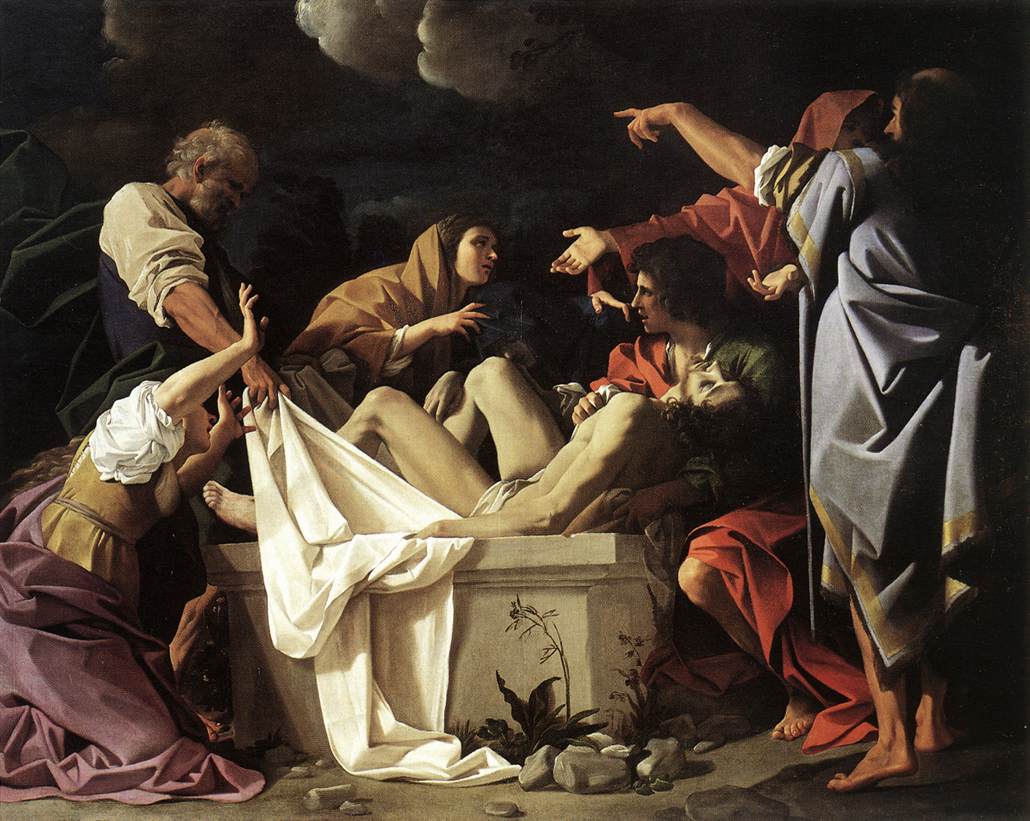
The Empty Tomb

The final article in this series is published today in the Scottish Catholic Observer. What does the resurrection really mean for us? No, really mean?
Get your copy this weekend or come back here next week for the full text.
The whole series is published on Kindle here

Find this on Kindle


The Way of the Cross – Fourteenth Station

Jesus is Laid in the Tomb.

Jesus burial

The fourteenth station on the Way of The Cross marks the end of the journey in the traditional ‘Stations’. It has become common nowadays to have a fifteenth station, The Resurrection. That’s where we will finish our journey next month. The fourteenth station is when Jesus is laid in the tomb. There is nothing surprising about that. Being laid in a tomb or grave marks the end of human life, something we all have before us.

It is the manner in which Jesus is laid in the tomb that raises questions in my mind. As we saw last month, the fact that Jesus’ body was taken down from the cross rather than being left as a warning to others was unusual. Because of the oncoming Sabbath he was hurriedly placed in the tomb, but the Jewish authorities had a stone rolled in front of the tomb and a guard detachment placed there.

I assumed this was done to thwart any attempt of his followers to remove the body and claim that he had been resurrected. However, Jesus’ foretelling of his resurrection was worded as ‘this temple’ and the people assumed he meant the Temple in Jerusalem. This was used against him at his trial. I wondered what the Jewish attitude to resurrection was.

After some research I discovered that the Jewish religion was divided on the idea of resurrection. People could believe there would be life after death or not. The Pharisees believed in resurrection but the Sadducees did not. Some believed in some forms of reincarnation. Whatever version they subscribed to, the Jews believed that any resurrection would only be in the time of the Messiah.

Perhaps some in authority might have had second thoughts about Jesus and hoped to shut him in the tomb if he did come back to life as Lazarus did. Whatever the truth of this supposition, I believe Jesus focussed minds of the Jewish people on death and what comes after.

For us this station is a reminder that we will certainly leave this world. This has been a central part of Christian belief and practice. We are welcomed into the Church at our baptism. The ceremony of baptism has been modified and changed over the centuries. John the Baptist baptised in the river. Early Christians were also baptised by immersion. Early churches had a pool for an immersive baptism. I believe there are still some examples in existence today.

The immersion in the water represented death and rising out of the water represented rebirth. We died to our old life and were reborn into a new life with Christ. At baptism we reject Satan and dedicate ourselves to Christ. I was very young at my baptism and remember none of it. Most of us experienced baptism as an infant so we missed the significance.

It is as adults that we have to look again at baptism and realise what promises were made on our behalf. We are promised to Christ and the values he taught. We are required to renounce the values of the world and materialism. That’s a difficult thing to do. How do we know what we can accept and what to reject in today’s world? It can be difficult to reject values which are normally accepted in our society. The Church’s attitude to sexual behaviour was scorned in the sixties and seventies. We were stuck in the past and needed to get up to date.

The recent scandals where cases of historical sexual abuse have hit the headlines are really a symptom of the lax attitude to sexual behaviour our society accepted. When pop stars and celebrities come to trial you won’t hear any mention of the Church’s teaching but we know it was and is right. We have to live our lives according to Gospel values whether that brings us into conflict with wider society or not.

This new life in Christ does not last forever on earth. The time comes when we too will be laid in the tomb as we pass from this life to the next. This station is a reminder of that and the fact that it will happen all too soon. I was recently at a hospital for an MIR scan. The hospital in Clydebank was a beautiful place and the doctors and staff were friendly and welcoming. Pleasant as this was it did not really prepare you for going into the scanner.

I lay in the machine as it buzzed and clanked, classical music playing through the earphones. When the scan was completed and I opened my eyes all I saw was the top of the tube I was in. It reminded me of Sean Connery waking up in a coffin in a James Bond film. Just for an instant I looked at the ‘coffin lid’ and wondered, “Is this what it will be like?”

The fourteenth station reminds us that the end could be sooner than we think. I was once asked what I would do if I was told I only had a short time to live. It is a difficult question to answer. Some people say they would visit places they had never seen. Some would spend all their money. Others, more thoughtfully, would visit friends and relations they had not seen for a long time.

I thought about it for a few minutes and decided that if I’m really living a Christian life, using my time for the coming of the Kingdom, then that’s what I should continue to do. If you are doing what God wants you to do then get on with it. On the other hand if you are not doing what you think you should do at the end of your time here then perhaps it’s time to start.

I suppose we should live every day as if it might be our last. In our fourteen stations we have seen that Jesus was welcomed by the crowds into Jerusalem and before the week was out he was executed. It made me thing about what I do with my time. If I die tomorrow will I have regrets, things I’ve left undone or will I have the satisfaction of having tried to live my life as Christ expected?

Now this is traditionally the last station on the Way of the cross, but there are modern variations which regard the fourteenth station as unfinished business. There are churches where there is a fifteenth station. The Way only finished at fourteen for those who had missed the message. It is not the end of the road.

We are now all on our Lenten road, striving for spiritual growth by our sacrifices and prayer. I’m back to giving up drink because I found it impossible to give up coffee. I hope you are all finding something uplifting in your Lenten works and feel the benefit at Easter. The last station will be in the Easter edition of the paper, time to contemplate what we have achieved on our Lenten Way of The Cross.

Joseph McGrath

Arthur and George – A criminal case

I’ll start with confession. I’m not a fan of Martin Clunes. Actually I don’t like anything he has been in. I disliked Men Behaving Badly. I can’t stand Doc Martin.

I was keen to see Arthur and George. I had read the book and thought the programme would be good. I was not so sure when I realised that Martin Cline’s was the leading character. However my opinion changed as soon as Arthur spoke. He was Doyle.

Visually this was really good. The cast is first class. So what’s wrong? The story has been sabotaged! Who is the criminal mastermind behind this assault? It’s the sound mixer. The music and other sounds drown out the speech. Shades of Jamaica Inn!

In this story, if you can’t hear the dialogue you completely lose the plot. What a waste! I hope I’m not the only one to complain about this.

I really hope somebody sorts this out before the next programme. Come on STV!

Jesus is Laid in the Tomb. The 14th Station on the Way of The Cross

Jesus burial

This month sees us reach the end of the traditional way of the cross. What’s so important about being laid in a tomb? Of course we are not finished yet!

This week sees this article published in the Scottish Catholic Observer. Get your copy in your local parish. The full text will be here next week.

Ready For Lent? Free E-Book Offer

Lent has begun. Are you ready for contemplation of the spiritual side?

Giving up chocolate, tea or alcohol is all very well (very difficult to give up red wine though) but you really need to attend to the spiritual side. If you would like something to prompt thoughts about religious belief then here’s a free offer for you.

My Kindle book is in free offer for two days only you can get it here on the 19th and 20th February 2015. That’s two days when you can save £0.99. (What a bargain!)

Click below to go to Amazon

A Creed For a Common Man